 Skip to content
Anal fissure
The anal fissure is among the most common conditions of the anus and rectum. It shows itself as marked pain during bowel movements, burning or bleeding – many patients describe the pain as like cutting glass. At Proctocare the treatment is led by MUDr. Karim Masalkhi, who has long specialized in proctology and the minimally invasive treatment of anorectal conditions.
- The treatment is led by MUDr. Karim Masalkhi with more than 20 years of experience and over 2000 successfully operated patients
- Gentle laser treatment combined with botulinum toxin, outpatient under local anesthesia
- An acute appointment within 24 hours – including weekends and holidays, no referral needed
Bratislava – Bernolákova 9 (STEIN II) | Žilina – Alexandra Rudnaya 100
What is an anal fissure?
An anal fissure is a longitudinal tear in the lining of the anal canal. It most often develops mechanically – after hard stool or with increased tension of the anal sphincter. With proper care, an acute fissure can heal on its own; the problem arises when the trouble persists for weeks to months.
With a chronic fissure, the sphincter tension increases and the blood supply to the edges of the wound worsens, so the fissure heals poorly and the problems keep coming back. In many patients, the pain during emptying leads to a fear of bowel movements, which makes constipation even worse – and the vicious circle closes. Similar symptoms can also be caused by hemorrhoids, which is why a precise diagnosis is key.
Symptoms of an anal fissure
In many patients the problems keep coming back and significantly reduce quality of life.
- sharp, cutting pain during bowel movements
- burning or a cutting feeling after emptying that can last for hours
- bright red blood on the toilet paper or on the surface of the stool
- spasm (cramping) and pressure in the anal area
- fear of emptying and holding back stool
- a small wound that does not heal for a long time, sometimes with a skin tag at the edge of the fissure
Rectal bleeding should never be automatically attributed to a fissure – read more on the page blood in stool.
Why does an anal fissure develop?
- hard stool and chronic constipation
- long-term increased tension of the anal sphincter
- childbirth and the period after it
- long-term irritation of the anus and rectum, for example from diarrhea
- repeated inflammation in the anal area
We also see pregnant patients – the examination is gentle and requires no preparation.
Diagnosis of an anal fissure
In most cases the diagnosis is made at the initial proctological examination – the doctor sees the fissure during a gentle visual and palpation examination. If needed to rule out other causes of the problems, an anoscopy or rectoscopy is added.
The initial examination takes up to 15 minutes. You do not need a referral – you book directly.
Treatment of an anal fissure at our clinic
We choose the approach according to the stage – from lifestyle measures to a minimally invasive procedure.
Conservative treatment
For an acute fissure, softening the stool, topical treatment, sitz baths and lifestyle measures are often enough. We set the exact plan at the initial examination and monitor the healing at follow-ups.
Anal fissure surgery with laser + botulinum toxin
For a chronic or repeatedly returning fissure we combine gentle laser treatment with an injection of botulinum toxin, which relaxes the sphincter and supports healing. Outpatient, under local anesthesia.
You will find the complete prices in the price list. The procedure takes approximately 15–20 minutes and you go home the same day.
When to see a doctor?
The longer a fissure lasts, the smaller the chance that it will heal on its own.
- pain during bowel movements lasts more than 2–3 weeks despite home treatment
- you repeatedly notice blood on the paper or on the stool
- the pain is so severe that you are afraid of emptying
- the problems come back again after a seeming improvement
Acute problems? An appointment within 24 hours
For acute patients we have appointments within 24 hours – including weekends and holidays. Call +421 948 687 667.
Frequently asked questions
A fissure typically causes sharp, cutting pain right during and after a bowel movement, while hemorrhoids hurt less and more often show themselves through bleeding or the feeling of a lump. Only a proctological examination can tell them apart reliably – and the two conditions can also occur at the same time.
With softer stool and proper care, an acute fissure often heals within a few weeks. If the problems persist longer, a chronic fissure develops, which rarely heals on its own and requires targeted treatment.
No. We perform the procedure under local anesthesia, and most patients manage it without any major problems. The advantage of the laser method is minimal post-operative pain and preservation of anal sphincter function.
The first follow-up takes place after about a week, and patients usually feel an improvement within the first weeks. Complete healing of the fissure can take approximately 12 to 20 weeks, depending on the extent of the tear, the sphincter tension and lifestyle.
Yes, with untreated constipation or an unsuitable lifestyle the problem can recur. That is why the treatment also includes recommendations on stool habits, fluid intake and diet, which help prevent the risk of recurrence.
Related topics
Hemorrhoids
The most common anorectal condition, with similar symptoms – bleeding, itching and discomfort.
Blood in stool
Rectal bleeding has many causes – find out when not to underestimate it.
Anal itching
Unpleasant itching often accompanies a fissure as well as other conditions of the anal area.
Who will take care of you
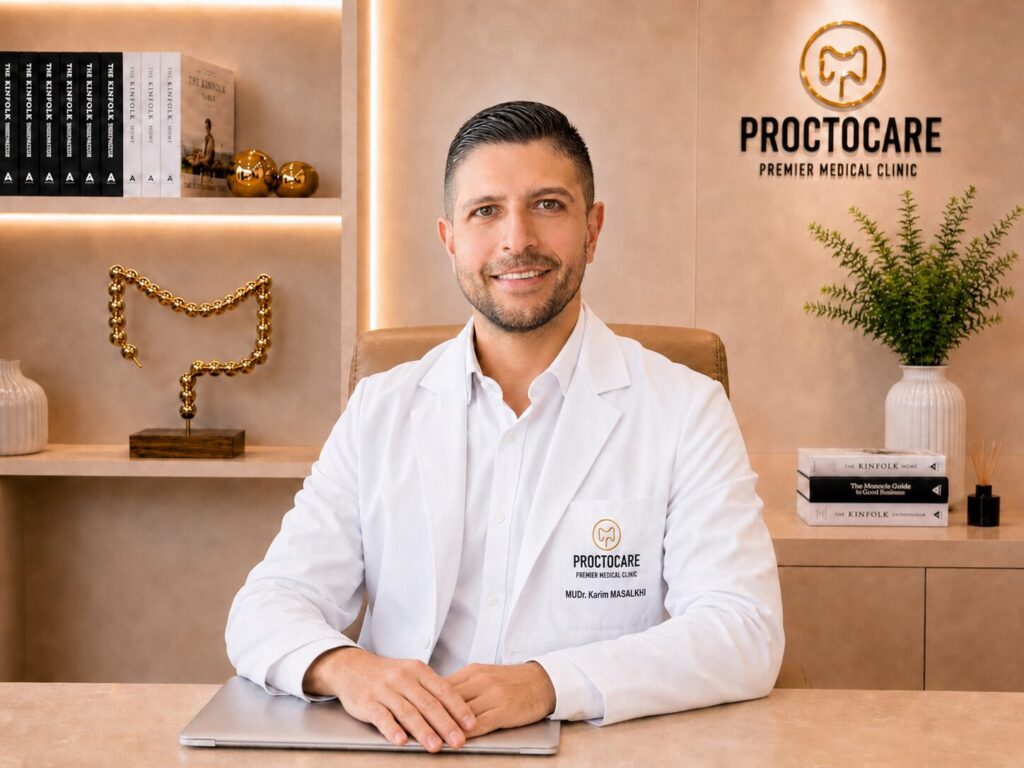
MUDr. Karim Masalkhi
Founder and head physician of the Proctocare clinic · surgeon – proctologist
A recognized specialist with more than 20 years of experience in minimally invasive proctology and laser surgery, with over 2000 successfully operated patients. He regularly attends training placements abroad focused on the most modern techniques of minimally invasive surgery, proctology and surgical oncology.
- Certified in the LHP® method – he was the first to bring laser surgery of hemorrhoids and anal fissures to Slovakia
- A specialist in correcting unsuccessful proctological surgeries of hemorrhoids and anal fissures
- He personally guarantees expertise, safety and a considerate approach to every patient
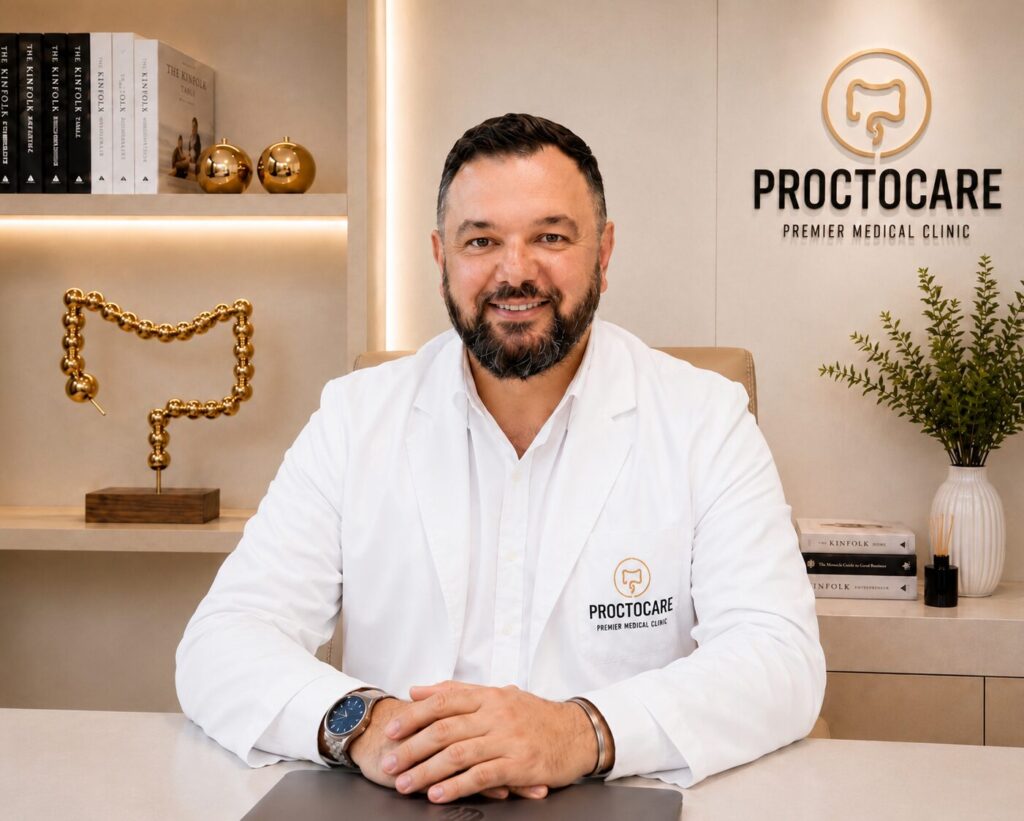
MUDr. Manuchekhr Burkhanov
Proctologist · office: Bratislava
He focuses on the diagnosis and outpatient treatment of proctological conditions – hemorrhoids, anal fissure and other disorders of the rectum – with a discreet and individual approach. He communicates with patients in Slovak, Russian and English.

MUDr. Matúš Kačeriak
Surgeon – proctologist · office: Žilina
At the Proctocare office in Žilina you will be cared for by MUDr. Matúš Kačeriak – a surgeon at the surgical department of the FNsP Žilina hospital. He focuses on proctological examinations, diagnosis of rectal disorders and minimally invasive proctological procedures with an emphasis on precise diagnosis and individual care.
Author and medical review: Your health is in the hands of MUDr. Karim Masalkhi – founder and head physician of the Proctocare clinic, a proctologist with more than 20 years of experience and over 2000 treated patients. · Last medical review: July 2026
Don't let pain during bowel movements torment you
Book a discreet examination – we have acute appointments within 24 hours, even on weekends.
Bratislava: Bernolákova 9, 811 07 (STEIN II) · Mon–Fri 07:30–19:30, Sat 07:30–12:30
Žilina: Alexandra Rudnaya 100, 010 01 · by appointment
info@proctocare.sk
Anal fissure
The anal fissure is among the most common conditions of the anus and rectum. It shows itself as marked pain during bowel movements, burning or bleeding – many patients describe the pain as like cutting glass. At Proctocare the treatment is led by MUDr. Karim Masalkhi, who has long specialized in proctology and the minimally invasive treatment of anorectal conditions.
- The treatment is led by MUDr. Karim Masalkhi with more than 20 years of experience and over 2000 successfully operated patients
- Gentle laser treatment combined with botulinum toxin, outpatient under local anesthesia
- An acute appointment within 24 hours – including weekends and holidays, no referral needed
Bratislava – Bernolákova 9 (STEIN II) | Žilina – Alexandra Rudnaya 100
What is an anal fissure?
An anal fissure is a longitudinal tear in the lining of the anal canal. It most often develops mechanically – after hard stool or with increased tension of the anal sphincter. With proper care, an acute fissure can heal on its own; the problem arises when the trouble persists for weeks to months.
With a chronic fissure, the sphincter tension increases and the blood supply to the edges of the wound worsens, so the fissure heals poorly and the problems keep coming back. In many patients, the pain during emptying leads to a fear of bowel movements, which makes constipation even worse – and the vicious circle closes. Similar symptoms can also be caused by hemorrhoids, which is why a precise diagnosis is key.
Symptoms of an anal fissure
In many patients the problems keep coming back and significantly reduce quality of life.
- sharp, cutting pain during bowel movements
- burning or a cutting feeling after emptying that can last for hours
- bright red blood on the toilet paper or on the surface of the stool
- spasm (cramping) and pressure in the anal area
- fear of emptying and holding back stool
- a small wound that does not heal for a long time, sometimes with a skin tag at the edge of the fissure
Rectal bleeding should never be automatically attributed to a fissure – read more on the page blood in stool.
Why does an anal fissure develop?
- hard stool and chronic constipation
- long-term increased tension of the anal sphincter
- childbirth and the period after it
- long-term irritation of the anus and rectum, for example from diarrhea
- repeated inflammation in the anal area
We also see pregnant patients – the examination is gentle and requires no preparation.
Diagnosis of an anal fissure
In most cases the diagnosis is made at the initial proctological examination – the doctor sees the fissure during a gentle visual and palpation examination. If needed to rule out other causes of the problems, an anoscopy or rectoscopy is added.
The initial examination takes up to 15 minutes. You do not need a referral – you book directly.
Treatment of an anal fissure at our clinic
We choose the approach according to the stage – from lifestyle measures to a minimally invasive procedure.
Conservative treatment
For an acute fissure, softening the stool, topical treatment, sitz baths and lifestyle measures are often enough. We set the exact plan at the initial examination and monitor the healing at follow-ups.
Anal fissure surgery with laser + botulinum toxin
For a chronic or repeatedly returning fissure we combine gentle laser treatment with an injection of botulinum toxin, which relaxes the sphincter and supports healing. Outpatient, under local anesthesia.
You will find the complete prices in the price list. The procedure takes approximately 15–20 minutes and you go home the same day.
When to see a doctor?
The longer a fissure lasts, the smaller the chance that it will heal on its own.
- pain during bowel movements lasts more than 2–3 weeks despite home treatment
- you repeatedly notice blood on the paper or on the stool
- the pain is so severe that you are afraid of emptying
- the problems come back again after a seeming improvement
Acute problems? An appointment within 24 hours
For acute patients we have appointments within 24 hours – including weekends and holidays. Call +421 948 687 667.
Frequently asked questions
A fissure typically causes sharp, cutting pain right during and after a bowel movement, while hemorrhoids hurt less and more often show themselves through bleeding or the feeling of a lump. Only a proctological examination can tell them apart reliably – and the two conditions can also occur at the same time.
With softer stool and proper care, an acute fissure often heals within a few weeks. If the problems persist longer, a chronic fissure develops, which rarely heals on its own and requires targeted treatment.
No. We perform the procedure under local anesthesia, and most patients manage it without any major problems. The advantage of the laser method is minimal post-operative pain and preservation of anal sphincter function.
The first follow-up takes place after about a week, and patients usually feel an improvement within the first weeks. Complete healing of the fissure can take approximately 12 to 20 weeks, depending on the extent of the tear, the sphincter tension and lifestyle.
Yes, with untreated constipation or an unsuitable lifestyle the problem can recur. That is why the treatment also includes recommendations on stool habits, fluid intake and diet, which help prevent the risk of recurrence.
Related topics
Hemorrhoids
The most common anorectal condition, with similar symptoms – bleeding, itching and discomfort.
Blood in stool
Rectal bleeding has many causes – find out when not to underestimate it.
Anal itching
Unpleasant itching often accompanies a fissure as well as other conditions of the anal area.
Who will take care of you
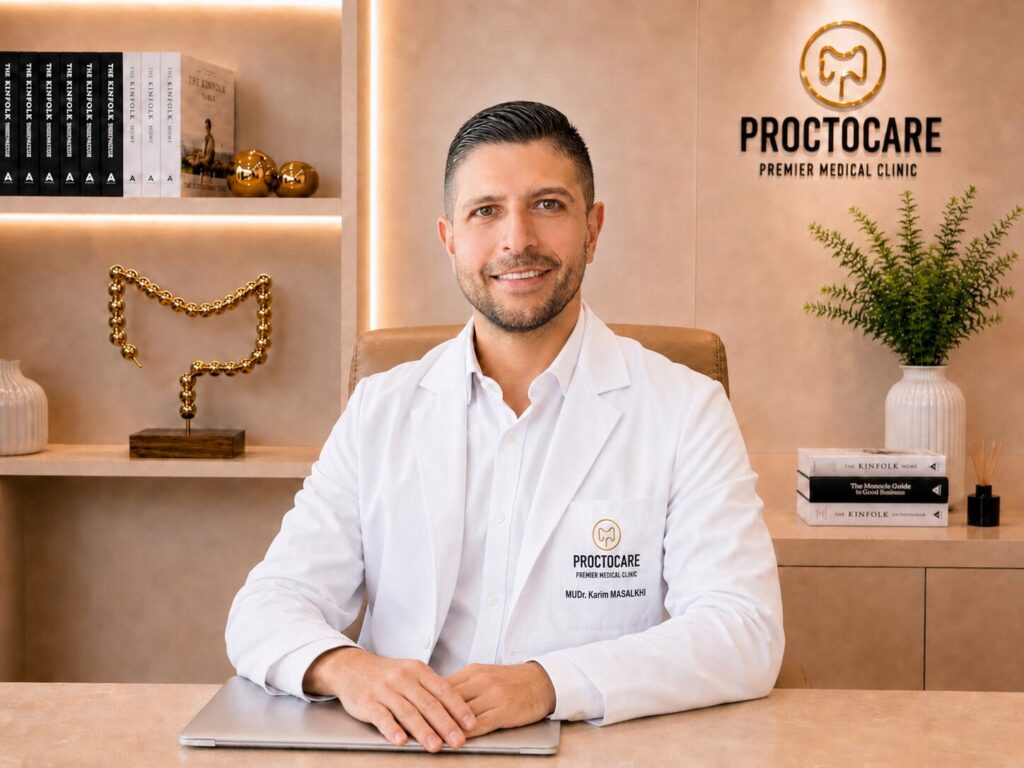
MUDr. Karim Masalkhi
Founder and head physician of the Proctocare clinic · surgeon – proctologist
A recognized specialist with more than 20 years of experience in minimally invasive proctology and laser surgery, with over 2000 successfully operated patients. He regularly attends training placements abroad focused on the most modern techniques of minimally invasive surgery, proctology and surgical oncology.
- Certified in the LHP® method – he was the first to bring laser surgery of hemorrhoids and anal fissures to Slovakia
- A specialist in correcting unsuccessful proctological surgeries of hemorrhoids and anal fissures
- He personally guarantees expertise, safety and a considerate approach to every patient
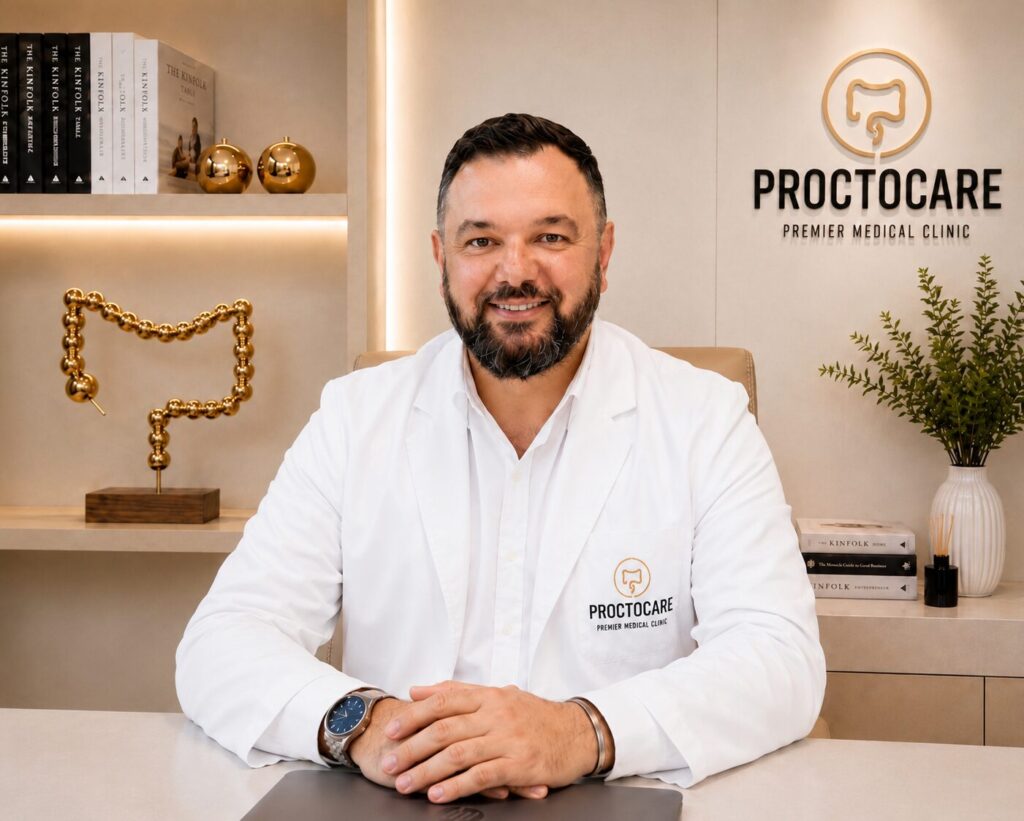
MUDr. Manuchekhr Burkhanov
Proctologist · office: Bratislava
He focuses on the diagnosis and outpatient treatment of proctological conditions – hemorrhoids, anal fissure and other disorders of the rectum – with a discreet and individual approach. He communicates with patients in Slovak, Russian and English.
MUDr. Matúš Kačeriak
Surgeon – proctologist · office: Žilina
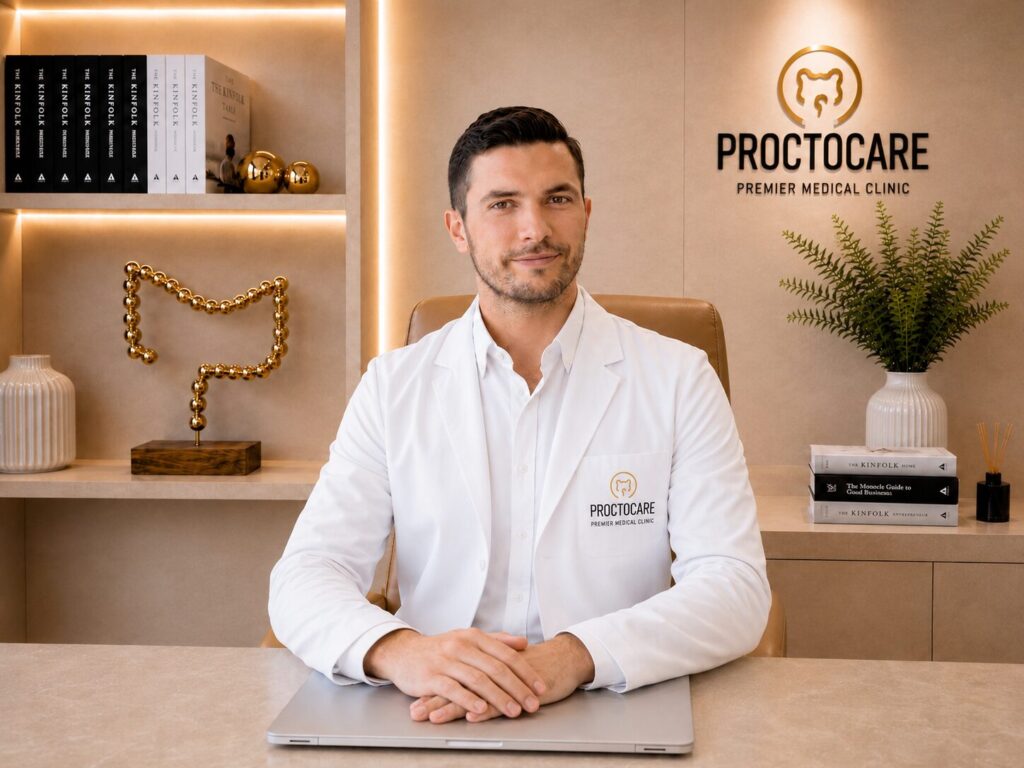
At the Proctocare office in Žilina you will be cared for by MUDr. Matúš Kačeriak – a surgeon at the surgical department of the FNsP Žilina hospital. He focuses on proctological examinations, diagnosis of rectal disorders and minimally invasive proctological procedures with an emphasis on precise diagnosis and individual care.
Author and medical review: Your health is in the hands of MUDr. Karim Masalkhi – founder and head physician of the Proctocare clinic, a proctologist with more than 20 years of experience and over 2000 treated patients. · Last medical review: July 2026
Don't let pain during bowel movements torment you
Book a discreet examination – we have acute appointments within 24 hours, even on weekends.
Bratislava: Bernolákova 9, 811 07 (STEIN II) · Mon–Fri 07:30–19:30, Sat 07:30–12:30
Žilina: Alexandra Rudnaya 100, 010 01 · by appointment
info@proctocare.sk
Anal fissure
The anal fissure is among the most common conditions of the anus and rectum. It shows itself as marked pain during bowel movements, burning or bleeding – many patients describe the pain as like cutting glass. At Proctocare the treatment is led by MUDr. Karim Masalkhi, who has long specialized in proctology and the minimally invasive treatment of anorectal conditions.
- The treatment is led by MUDr. Karim Masalkhi with more than 20 years of experience and over 2000 successfully operated patients
- Gentle laser treatment combined with botulinum toxin, outpatient under local anesthesia
- An acute appointment within 24 hours – including weekends and holidays, no referral needed
Bratislava – Bernolákova 9 (STEIN II) | Žilina – Alexandra Rudnaya 100
What is an anal fissure?
An anal fissure is a longitudinal tear in the lining of the anal canal. It most often develops mechanically – after hard stool or with increased tension of the anal sphincter. With proper care, an acute fissure can heal on its own; the problem arises when the trouble persists for weeks to months.
With a chronic fissure, the sphincter tension increases and the blood supply to the edges of the wound worsens, so the fissure heals poorly and the problems keep coming back. In many patients, the pain during emptying leads to a fear of bowel movements, which makes constipation even worse – and the vicious circle closes. Similar symptoms can also be caused by hemorrhoids, which is why a precise diagnosis is key.
Symptoms of an anal fissure
In many patients the problems keep coming back and significantly reduce quality of life.
- sharp, cutting pain during bowel movements
- burning or a cutting feeling after emptying that can last for hours
- bright red blood on the toilet paper or on the surface of the stool
- spasm (cramping) and pressure in the anal area
- fear of emptying and holding back stool
- a small wound that does not heal for a long time, sometimes with a skin tag at the edge of the fissure
Rectal bleeding should never be automatically attributed to a fissure – read more on the page blood in stool.
Why does an anal fissure develop?
- hard stool and chronic constipation
- long-term increased tension of the anal sphincter
- childbirth and the period after it
- long-term irritation of the anus and rectum, for example from diarrhea
- repeated inflammation in the anal area
We also see pregnant patients – the examination is gentle and requires no preparation.
Diagnosis of an anal fissure
In most cases the diagnosis is made at the initial proctological examination – the doctor sees the fissure during a gentle visual and palpation examination. If needed to rule out other causes of the problems, an anoscopy or rectoscopy is added.
The initial examination takes up to 15 minutes. You do not need a referral – you book directly.
Treatment of an anal fissure at our clinic
We choose the approach according to the stage – from lifestyle measures to a minimally invasive procedure.
Conservative treatment
For an acute fissure, softening the stool, topical treatment, sitz baths and lifestyle measures are often enough. We set the exact plan at the initial examination and monitor the healing at follow-ups.
Anal fissure surgery with laser + botulinum toxin
For a chronic or repeatedly returning fissure we combine gentle laser treatment with an injection of botulinum toxin, which relaxes the sphincter and supports healing. Outpatient, under local anesthesia.
You will find the complete prices in the price list. The procedure takes approximately 15–20 minutes and you go home the same day.
When to see a doctor?
The longer a fissure lasts, the smaller the chance that it will heal on its own.
- pain during bowel movements lasts more than 2–3 weeks despite home treatment
- you repeatedly notice blood on the paper or on the stool
- the pain is so severe that you are afraid of emptying
- the problems come back again after a seeming improvement
Acute problems? An appointment within 24 hours
For acute patients we have appointments within 24 hours – including weekends and holidays. Call +421 948 687 667.
Frequently asked questions
A fissure typically causes sharp, cutting pain right during and after a bowel movement, while hemorrhoids hurt less and more often show themselves through bleeding or the feeling of a lump. Only a proctological examination can tell them apart reliably – and the two conditions can also occur at the same time.
With softer stool and proper care, an acute fissure often heals within a few weeks. If the problems persist longer, a chronic fissure develops, which rarely heals on its own and requires targeted treatment.
No. We perform the procedure under local anesthesia, and most patients manage it without any major problems. The advantage of the laser method is minimal post-operative pain and preservation of anal sphincter function.
The first follow-up takes place after about a week, and patients usually feel an improvement within the first weeks. Complete healing of the fissure can take approximately 12 to 20 weeks, depending on the extent of the tear, the sphincter tension and lifestyle.
Yes, with untreated constipation or an unsuitable lifestyle the problem can recur. That is why the treatment also includes recommendations on stool habits, fluid intake and diet, which help prevent the risk of recurrence.
Related topics
Hemorrhoids
The most common anorectal condition, with similar symptoms – bleeding, itching and discomfort.
Blood in stool
Rectal bleeding has many causes – find out when not to underestimate it.
Anal itching
Unpleasant itching often accompanies a fissure as well as other conditions of the anal area.
Who will take care of you

MUDr. Karim Masalkhi
Founder and head physician of the Proctocare clinic · surgeon – proctologist
A recognized specialist with more than 20 years of experience in minimally invasive proctology and laser surgery, with over 2000 successfully operated patients. He regularly attends training placements abroad focused on the most modern techniques of minimally invasive surgery, proctology and surgical oncology.
- Certified in the LHP® method – he was the first to bring laser surgery of hemorrhoids and anal fissures to Slovakia
- A specialist in correcting unsuccessful proctological surgeries of hemorrhoids and anal fissures
- He personally guarantees expertise, safety and a considerate approach to every patient
MUDr. Manuchekhr Burkhanov
Proctologist · office: Bratislava
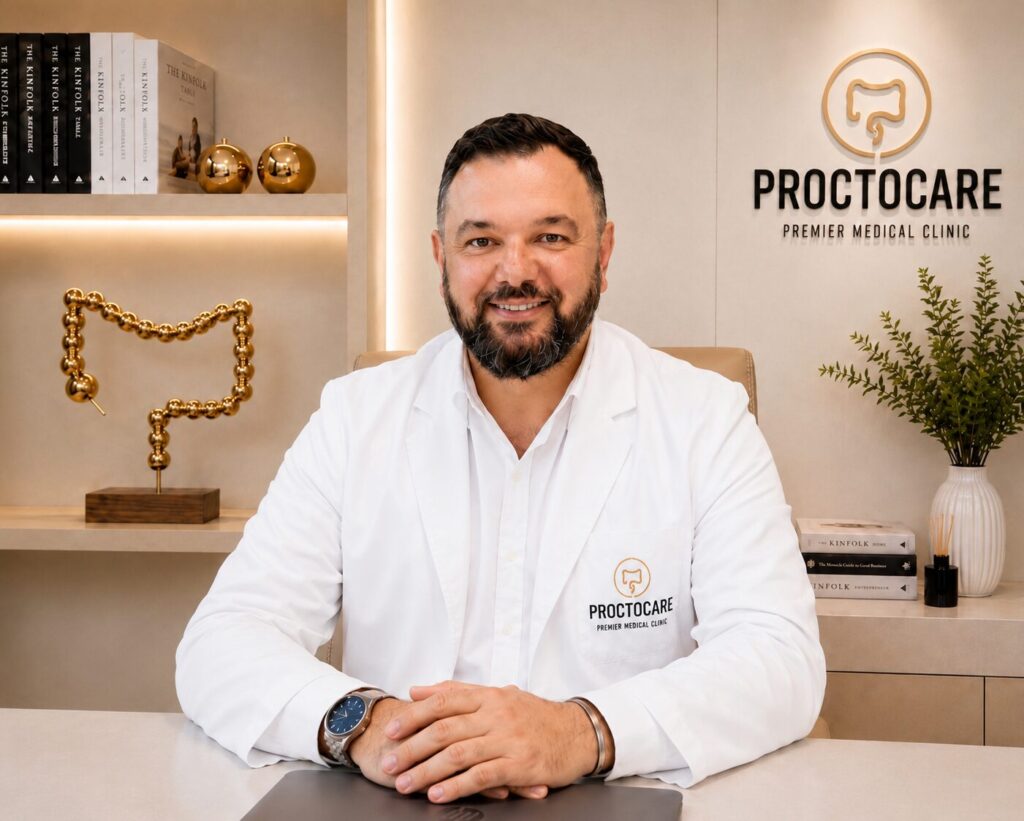
He focuses on the diagnosis and outpatient treatment of proctological conditions – hemorrhoids, anal fissure and other disorders of the rectum – with a discreet and individual approach. He communicates with patients in Slovak, Russian and English.
MUDr. Matúš Kačeriak
Surgeon – proctologist · office: Žilina
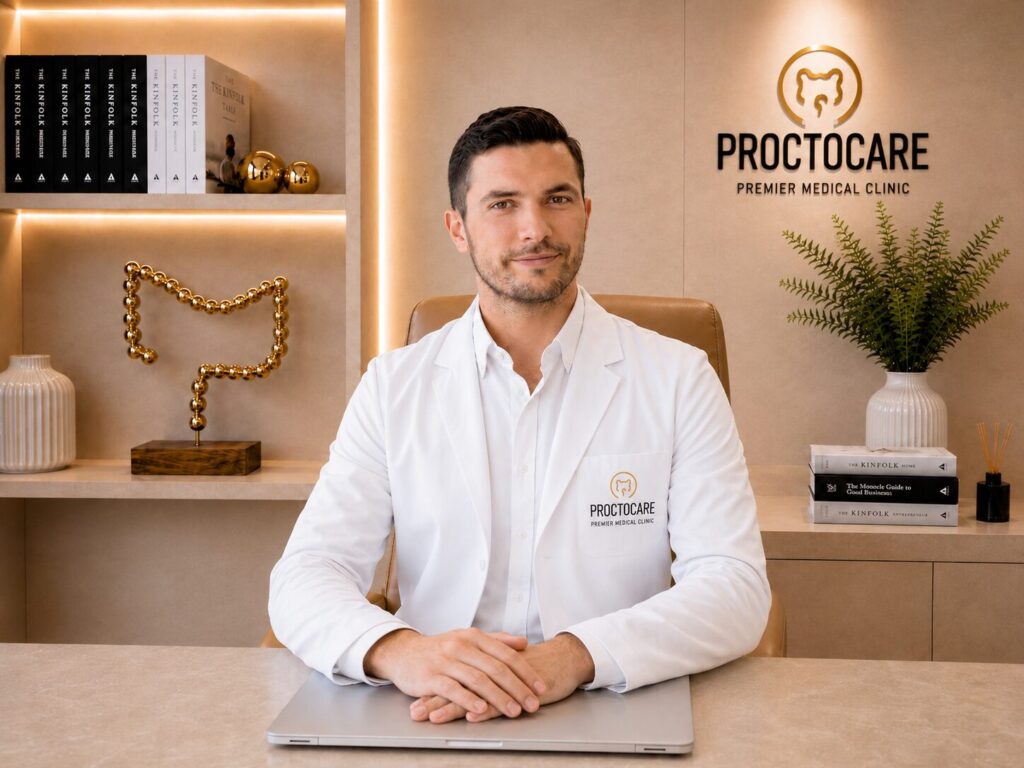
At the Proctocare office in Žilina you will be cared for by MUDr. Matúš Kačeriak – a surgeon at the surgical department of the FNsP Žilina hospital. He focuses on proctological examinations, diagnosis of rectal disorders and minimally invasive proctological procedures with an emphasis on precise diagnosis and individual care.
Author and medical review: Your health is in the hands of MUDr. Karim Masalkhi – founder and head physician of the Proctocare clinic, a proctologist with more than 20 years of experience and over 2000 treated patients. · Last medical review: July 2026
Don't let pain during bowel movements torment you
Book a discreet examination – we have acute appointments within 24 hours, even on weekends.
Bratislava: Bernolákova 9, 811 07 (STEIN II) · Mon–Fri 07:30–19:30, Sat 07:30–12:30
Žilina: Alexandra Rudnaya 100, 010 01 · by appointment
info@proctocare.sk