
Anal warts (HPV)
Anal warts are among the common conditions of the anal area, caused by the human papillomavirus (HPV). They can cause itching, skin irritation, discomfort or bleeding. At Proctocare they are examined and removed by MUDr. Karim Masalkhi – discreetly, on an outpatient basis and with modern minimally invasive methods.
- A discreet examination and treatment by MUDr. Karim Masalkhi, an experienced proctologist
- Modern outpatient removal with no hospital stay
- An appointment within 24 hours – including weekends and holidays, no referral needed
Bratislava – Bernolákova 9 (STEIN II) | Žilina – Alexandra Rudnaya 100
What are anal warts?
Anal warts (perianal condylomas) are soft growths of a pink to grayish color that grow on the skin around the anus, sometimes also in the anal canal. They are caused by the human papillomavirus (HPV), which is transmitted mainly through intimate contact. It is a very widespread virus – most people come into contact with it during their lives, and having warts says nothing about hygiene or lifestyle.
Anal warts are not immediately dangerous, but without treatment they can grow and spread. In addition, some HPV types are associated with a risk of cancerous changes, so it is advisable to have the growths assessed by a specialist and removed. By sight they can be confused with other lesions, for example anal skin tags or anal polyps – only an examination gives a precise answer.
Symptoms of anal warts
- small soft growths around the anus, singly or in clusters
- itching and skin irritation
- a feeling of moisture or of a foreign body
- occasional bleeding during bowel movements or when wiping
- gradual enlargement and multiplication of the growths
Some warts cause no problems at all and patients notice them by chance – even then it is worth having them assessed.
How do anal warts develop?
- infection with the human papillomavirus (HPV), most often transmitted through intimate contact
- the virus can be present in the skin for a long time without any signs – the growths can appear even months after infection
- a weakened immune system makes it easier for the growths to develop and spread
- the moist and irritated environment of the anal area favors the growth of warts
We approach the topic without judgment and with maximum discretion. Since HPV is transmitted through intimate contact, an examination is also recommended for your partner – for women it is advisable to mention the finding to their gynecologist as well. Vaccination against HPV and barrier protection reduce the risk of infection, but the latter does not rule out transmission completely.
Diagnosis
An experienced proctologist usually recognizes anal warts at a glance. The examination also includes an assessment of the anal canal – if needed with an anoscopy or rectoscopy – so that growths not visible from the outside are not missed.
You book directly, no referral needed.
Treatment of anal warts at our clinic
The aim is to remove all the growths gently, with a good cosmetic result and the lowest possible risk of recurrence.
A discreet specialist examination
We assess the extent of the findings, including the anal canal, distinguish warts from other growths and propose a suitable treatment plan.
Outpatient removal with minimally invasive methods
We remove anal warts gently, on an outpatient basis and with no hospital stay, usually under local anesthesia. We specify the price after the initial examination, according to the extent of the findings.
Follow-ups and prevention of recurrence
Since the virus can persist in the skin, the treatment includes follow-up examinations and recommendations on how to reduce the risk of the growths returning.
You will find an overview of examination prices in the price list.
When to see a doctor?
The smaller the extent of the growths, the simpler and gentler their removal.
- you have felt or noticed growths around the anus
- the growths are getting bigger, multiplying or bleeding
- you feel itching, moisture or irritation in the anal area
- you have had warts removed before and they have appeared again
Discreet and with no waiting
Book a discreet examination at +421 948 687 667 – we have appointments within 24 hours, including weekends and holidays.
Frequently asked questions
Not immediately, but without treatment they grow and spread, and some HPV types are associated with a risk of cancerous changes. That is why we recommend having the growths assessed by a specialist and removed, even if they are not causing problems at the moment.
It is an outpatient minimally invasive procedure, usually under local anesthesia. It requires no hospital stay – you go home the same day. We propose the exact approach according to the number, size and location of the growths.
We recommend it. HPV is transmitted through intimate contact, so it is advisable for your partner to be examined as well – for women, including a gynecological check-up. It is not about blame, but about preventing repeated transmission and catching any changes early.
Yes, because the virus can persist in the skin even after the growths are removed. The risk of recurrence is reduced by follow-up examinations, a healthy immune system and thorough removal of all the lesions, including in the anal canal – which is why we examine it too.
Not necessarily. HPV can be present in the skin for a long time without any signs, and the growths can appear even many months after infection. The finding therefore says nothing about when or from whom the transmission occurred.
Related topics
Anal itching
Itching of the anal area has many causes – warts are just one of them.
Anal skin tags
Benign skin folds that are often confused with warts.
Anal polyps
Growths in the anal canal that deserve removal and histology.
Who will take care of you

MUDr. Karim Masalkhi
Founder and head physician of the Proctocare clinic · surgeon – proctologist
A recognized specialist with more than 20 years of experience in minimally invasive proctology and laser surgery, with over 2000 successfully operated patients. He regularly attends training placements abroad focused on the most modern techniques of minimally invasive surgery, proctology and surgical oncology.
- Certified in the LHP® method – he was the first to bring laser surgery of hemorrhoids and anal fissures to Slovakia
- A specialist in correcting unsuccessful proctological surgeries of hemorrhoids and anal fissures
- He personally guarantees expertise, safety and a considerate approach to every patient
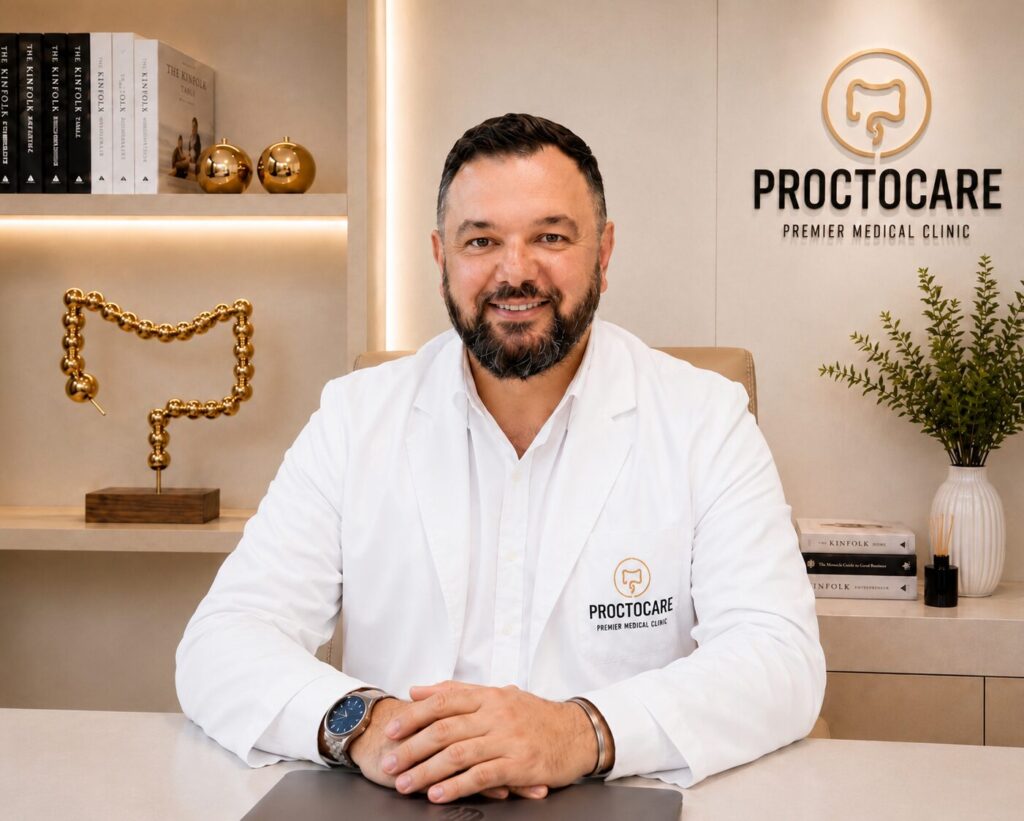
MUDr. Manuchekhr Burkhanov
Proctologist · office: Bratislava
He focuses on the diagnosis and outpatient treatment of proctological conditions – hemorrhoids, anal fissure and other disorders of the rectum – with a discreet and individual approach. He communicates with patients in Slovak, Russian and English.
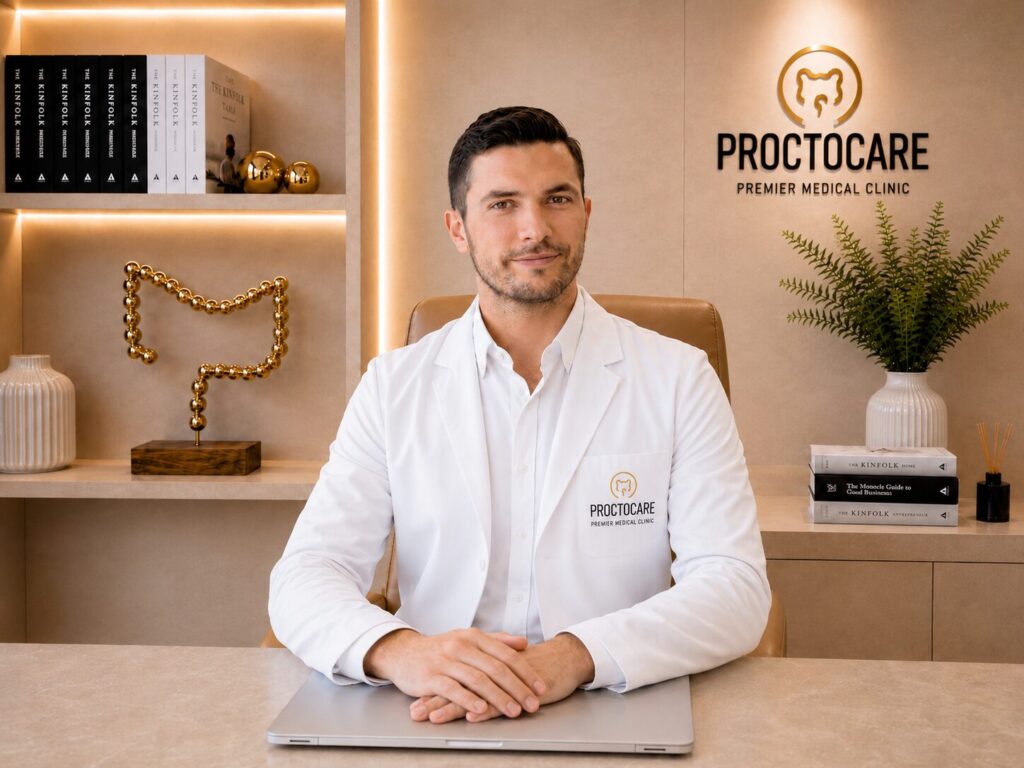
MUDr. Matúš Kačeriak
Surgeon – proctologist · office: Žilina
At the Proctocare office in Žilina you will be cared for by MUDr. Matúš Kačeriak – a surgeon at the surgical department of the FNsP Žilina hospital. He focuses on proctological examinations, diagnosis of rectal disorders and minimally invasive proctological procedures with an emphasis on precise diagnosis and individual care.
Author and medical review: Your health is in the hands of MUDr. Karim Masalkhi – founder and head physician of the Proctocare clinic, a proctologist with more than 20 years of experience and over 2000 treated patients. · Last medical review: July 2026
Noticed growths at the anus?
Book a discreet examination – an appointment within 24 hours, an outpatient solution with no hospital stay.
Bratislava: Bernolákova 9, 811 07 (STEIN II) · Mon–Fri 07:30–19:30, Sat 07:30–12:30
Žilina: Alexandra Rudnaya 100, 010 01 · by appointment
info@proctocare.sk
Anal warts (HPV)
Anal warts are among the common conditions of the anal area, caused by the human papillomavirus (HPV). They can cause itching, skin irritation, discomfort or bleeding. At Proctocare they are examined and removed by MUDr. Karim Masalkhi – discreetly, on an outpatient basis and with modern minimally invasive methods.
- A discreet examination and treatment by MUDr. Karim Masalkhi, an experienced proctologist
- Modern outpatient removal with no hospital stay
- An appointment within 24 hours – including weekends and holidays, no referral needed
Bratislava – Bernolákova 9 (STEIN II) | Žilina – Alexandra Rudnaya 100
What are anal warts?
Anal warts (perianal condylomas) are soft growths of a pink to grayish color that grow on the skin around the anus, sometimes also in the anal canal. They are caused by the human papillomavirus (HPV), which is transmitted mainly through intimate contact. It is a very widespread virus – most people come into contact with it during their lives, and having warts says nothing about hygiene or lifestyle.
Anal warts are not immediately dangerous, but without treatment they can grow and spread. In addition, some HPV types are associated with a risk of cancerous changes, so it is advisable to have the growths assessed by a specialist and removed. By sight they can be confused with other lesions, for example anal skin tags or anal polyps – only an examination gives a precise answer.
Symptoms of anal warts
- small soft growths around the anus, singly or in clusters
- itching and skin irritation
- a feeling of moisture or of a foreign body
- occasional bleeding during bowel movements or when wiping
- gradual enlargement and multiplication of the growths
Some warts cause no problems at all and patients notice them by chance – even then it is worth having them assessed.
How do anal warts develop?
- infection with the human papillomavirus (HPV), most often transmitted through intimate contact
- the virus can be present in the skin for a long time without any signs – the growths can appear even months after infection
- a weakened immune system makes it easier for the growths to develop and spread
- the moist and irritated environment of the anal area favors the growth of warts
We approach the topic without judgment and with maximum discretion. Since HPV is transmitted through intimate contact, an examination is also recommended for your partner – for women it is advisable to mention the finding to their gynecologist as well. Vaccination against HPV and barrier protection reduce the risk of infection, but the latter does not rule out transmission completely.
Diagnosis
An experienced proctologist usually recognizes anal warts at a glance. The examination also includes an assessment of the anal canal – if needed with an anoscopy or rectoscopy – so that growths not visible from the outside are not missed.
You book directly, no referral needed.
Treatment of anal warts at our clinic
The aim is to remove all the growths gently, with a good cosmetic result and the lowest possible risk of recurrence.
A discreet specialist examination
We assess the extent of the findings, including the anal canal, distinguish warts from other growths and propose a suitable treatment plan.
Outpatient removal with minimally invasive methods
We remove anal warts gently, on an outpatient basis and with no hospital stay, usually under local anesthesia. We specify the price after the initial examination, according to the extent of the findings.
Follow-ups and prevention of recurrence
Since the virus can persist in the skin, the treatment includes follow-up examinations and recommendations on how to reduce the risk of the growths returning.
You will find an overview of examination prices in the price list.
When to see a doctor?
The smaller the extent of the growths, the simpler and gentler their removal.
- you have felt or noticed growths around the anus
- the growths are getting bigger, multiplying or bleeding
- you feel itching, moisture or irritation in the anal area
- you have had warts removed before and they have appeared again
Discreet and with no waiting
Book a discreet examination at +421 948 687 667 – we have appointments within 24 hours, including weekends and holidays.
Frequently asked questions
Not immediately, but without treatment they grow and spread, and some HPV types are associated with a risk of cancerous changes. That is why we recommend having the growths assessed by a specialist and removed, even if they are not causing problems at the moment.
It is an outpatient minimally invasive procedure, usually under local anesthesia. It requires no hospital stay – you go home the same day. We propose the exact approach according to the number, size and location of the growths.
We recommend it. HPV is transmitted through intimate contact, so it is advisable for your partner to be examined as well – for women, including a gynecological check-up. It is not about blame, but about preventing repeated transmission and catching any changes early.
Yes, because the virus can persist in the skin even after the growths are removed. The risk of recurrence is reduced by follow-up examinations, a healthy immune system and thorough removal of all the lesions, including in the anal canal – which is why we examine it too.
Not necessarily. HPV can be present in the skin for a long time without any signs, and the growths can appear even many months after infection. The finding therefore says nothing about when or from whom the transmission occurred.
Related topics
Anal itching
Itching of the anal area has many causes – warts are just one of them.
Anal skin tags
Benign skin folds that are often confused with warts.
Anal polyps
Growths in the anal canal that deserve removal and histology.
Who will take care of you
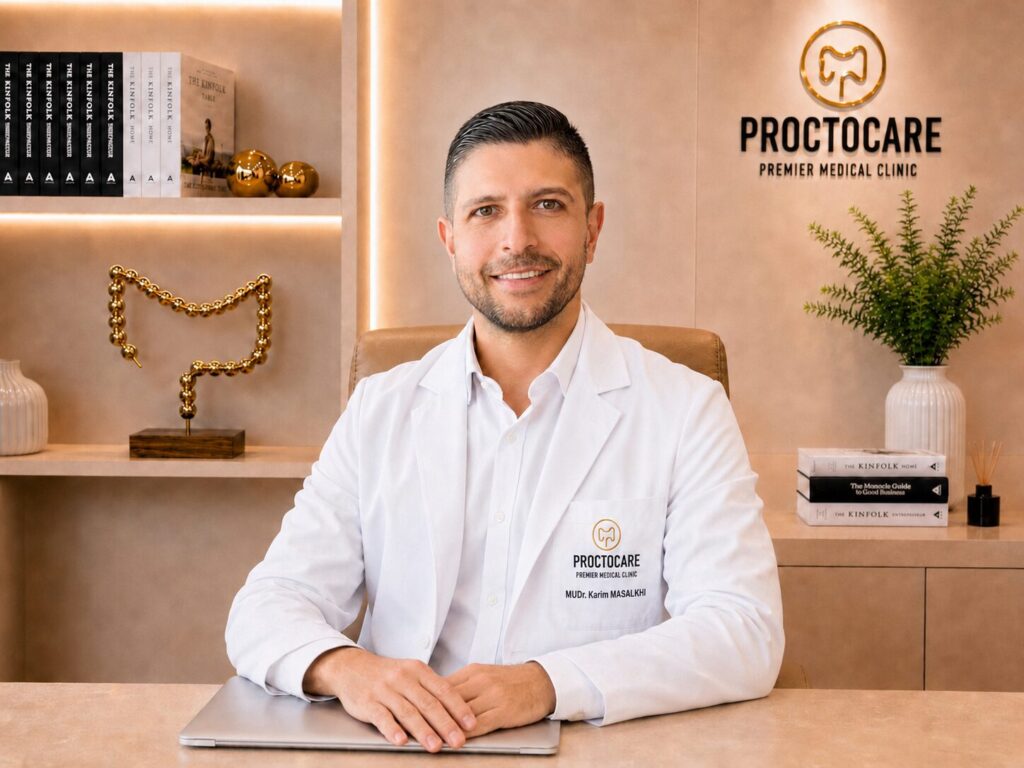
MUDr. Karim Masalkhi
Founder and head physician of the Proctocare clinic · surgeon – proctologist
A recognized specialist with more than 20 years of experience in minimally invasive proctology and laser surgery, with over 2000 successfully operated patients. He regularly attends training placements abroad focused on the most modern techniques of minimally invasive surgery, proctology and surgical oncology.
- Certified in the LHP® method – he was the first to bring laser surgery of hemorrhoids and anal fissures to Slovakia
- A specialist in correcting unsuccessful proctological surgeries of hemorrhoids and anal fissures
- He personally guarantees expertise, safety and a considerate approach to every patient
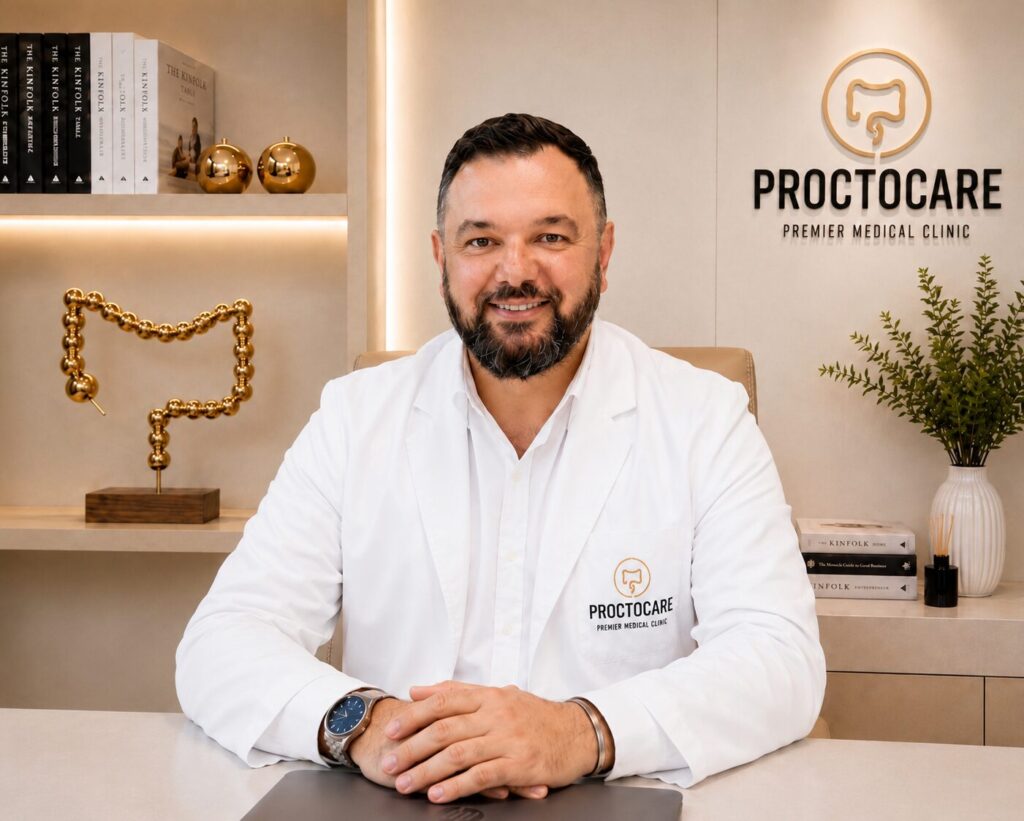
MUDr. Manuchekhr Burkhanov
Proctologist · office: Bratislava
He focuses on the diagnosis and outpatient treatment of proctological conditions – hemorrhoids, anal fissure and other disorders of the rectum – with a discreet and individual approach. He communicates with patients in Slovak, Russian and English.
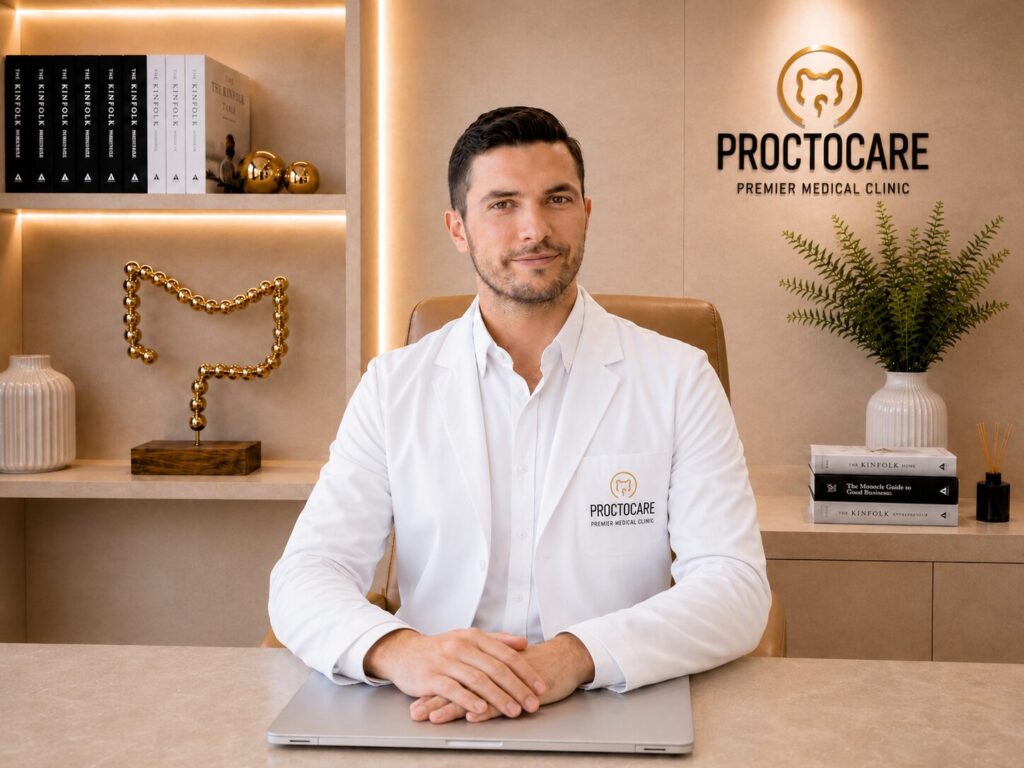
MUDr. Matúš Kačeriak
Surgeon – proctologist · office: Žilina
At the Proctocare office in Žilina you will be cared for by MUDr. Matúš Kačeriak – a surgeon at the surgical department of the FNsP Žilina hospital. He focuses on proctological examinations, diagnosis of rectal disorders and minimally invasive proctological procedures with an emphasis on precise diagnosis and individual care.
Author and medical review: Your health is in the hands of MUDr. Karim Masalkhi – founder and head physician of the Proctocare clinic, a proctologist with more than 20 years of experience and over 2000 treated patients. · Last medical review: July 2026
Noticed growths at the anus?
Book a discreet examination – an appointment within 24 hours, an outpatient solution with no hospital stay.
Bratislava: Bernolákova 9, 811 07 (STEIN II) · Mon–Fri 07:30–19:30, Sat 07:30–12:30
Žilina: Alexandra Rudnaya 100, 010 01 · by appointment
info@proctocare.sk
Anal warts (HPV)
Anal warts are among the common conditions of the anal area, caused by the human papillomavirus (HPV). They can cause itching, skin irritation, discomfort or bleeding. At Proctocare they are examined and removed by MUDr. Karim Masalkhi – discreetly, on an outpatient basis and with modern minimally invasive methods.
- A discreet examination and treatment by MUDr. Karim Masalkhi, an experienced proctologist
- Modern outpatient removal with no hospital stay
- An appointment within 24 hours – including weekends and holidays, no referral needed
Bratislava – Bernolákova 9 (STEIN II) | Žilina – Alexandra Rudnaya 100
What are anal warts?
Anal warts (perianal condylomas) are soft growths of a pink to grayish color that grow on the skin around the anus, sometimes also in the anal canal. They are caused by the human papillomavirus (HPV), which is transmitted mainly through intimate contact. It is a very widespread virus – most people come into contact with it during their lives, and having warts says nothing about hygiene or lifestyle.
Anal warts are not immediately dangerous, but without treatment they can grow and spread. In addition, some HPV types are associated with a risk of cancerous changes, so it is advisable to have the growths assessed by a specialist and removed. By sight they can be confused with other lesions, for example anal skin tags or anal polyps – only an examination gives a precise answer.
Symptoms of anal warts
- small soft growths around the anus, singly or in clusters
- itching and skin irritation
- a feeling of moisture or of a foreign body
- occasional bleeding during bowel movements or when wiping
- gradual enlargement and multiplication of the growths
Some warts cause no problems at all and patients notice them by chance – even then it is worth having them assessed.
How do anal warts develop?
- infection with the human papillomavirus (HPV), most often transmitted through intimate contact
- the virus can be present in the skin for a long time without any signs – the growths can appear even months after infection
- a weakened immune system makes it easier for the growths to develop and spread
- the moist and irritated environment of the anal area favors the growth of warts
We approach the topic without judgment and with maximum discretion. Since HPV is transmitted through intimate contact, an examination is also recommended for your partner – for women it is advisable to mention the finding to their gynecologist as well. Vaccination against HPV and barrier protection reduce the risk of infection, but the latter does not rule out transmission completely.
Diagnosis
An experienced proctologist usually recognizes anal warts at a glance. The examination also includes an assessment of the anal canal – if needed with an anoscopy or rectoscopy – so that growths not visible from the outside are not missed.
You book directly, no referral needed.
Treatment of anal warts at our clinic
The aim is to remove all the growths gently, with a good cosmetic result and the lowest possible risk of recurrence.
A discreet specialist examination
We assess the extent of the findings, including the anal canal, distinguish warts from other growths and propose a suitable treatment plan.
Outpatient removal with minimally invasive methods
We remove anal warts gently, on an outpatient basis and with no hospital stay, usually under local anesthesia. We specify the price after the initial examination, according to the extent of the findings.
Follow-ups and prevention of recurrence
Since the virus can persist in the skin, the treatment includes follow-up examinations and recommendations on how to reduce the risk of the growths returning.
You will find an overview of examination prices in the price list.
When to see a doctor?
The smaller the extent of the growths, the simpler and gentler their removal.
- you have felt or noticed growths around the anus
- the growths are getting bigger, multiplying or bleeding
- you feel itching, moisture or irritation in the anal area
- you have had warts removed before and they have appeared again
Discreet and with no waiting
Book a discreet examination at +421 948 687 667 – we have appointments within 24 hours, including weekends and holidays.
Frequently asked questions
Not immediately, but without treatment they grow and spread, and some HPV types are associated with a risk of cancerous changes. That is why we recommend having the growths assessed by a specialist and removed, even if they are not causing problems at the moment.
It is an outpatient minimally invasive procedure, usually under local anesthesia. It requires no hospital stay – you go home the same day. We propose the exact approach according to the number, size and location of the growths.
We recommend it. HPV is transmitted through intimate contact, so it is advisable for your partner to be examined as well – for women, including a gynecological check-up. It is not about blame, but about preventing repeated transmission and catching any changes early.
Yes, because the virus can persist in the skin even after the growths are removed. The risk of recurrence is reduced by follow-up examinations, a healthy immune system and thorough removal of all the lesions, including in the anal canal – which is why we examine it too.
Not necessarily. HPV can be present in the skin for a long time without any signs, and the growths can appear even many months after infection. The finding therefore says nothing about when or from whom the transmission occurred.
Related topics
Anal itching
Itching of the anal area has many causes – warts are just one of them.
Anal skin tags
Benign skin folds that are often confused with warts.
Anal polyps
Growths in the anal canal that deserve removal and histology.
Who will take care of you

MUDr. Karim Masalkhi
Founder and head physician of the Proctocare clinic · surgeon – proctologist
A recognized specialist with more than 20 years of experience in minimally invasive proctology and laser surgery, with over 2000 successfully operated patients. He regularly attends training placements abroad focused on the most modern techniques of minimally invasive surgery, proctology and surgical oncology.
- Certified in the LHP® method – he was the first to bring laser surgery of hemorrhoids and anal fissures to Slovakia
- A specialist in correcting unsuccessful proctological surgeries of hemorrhoids and anal fissures
- He personally guarantees expertise, safety and a considerate approach to every patient
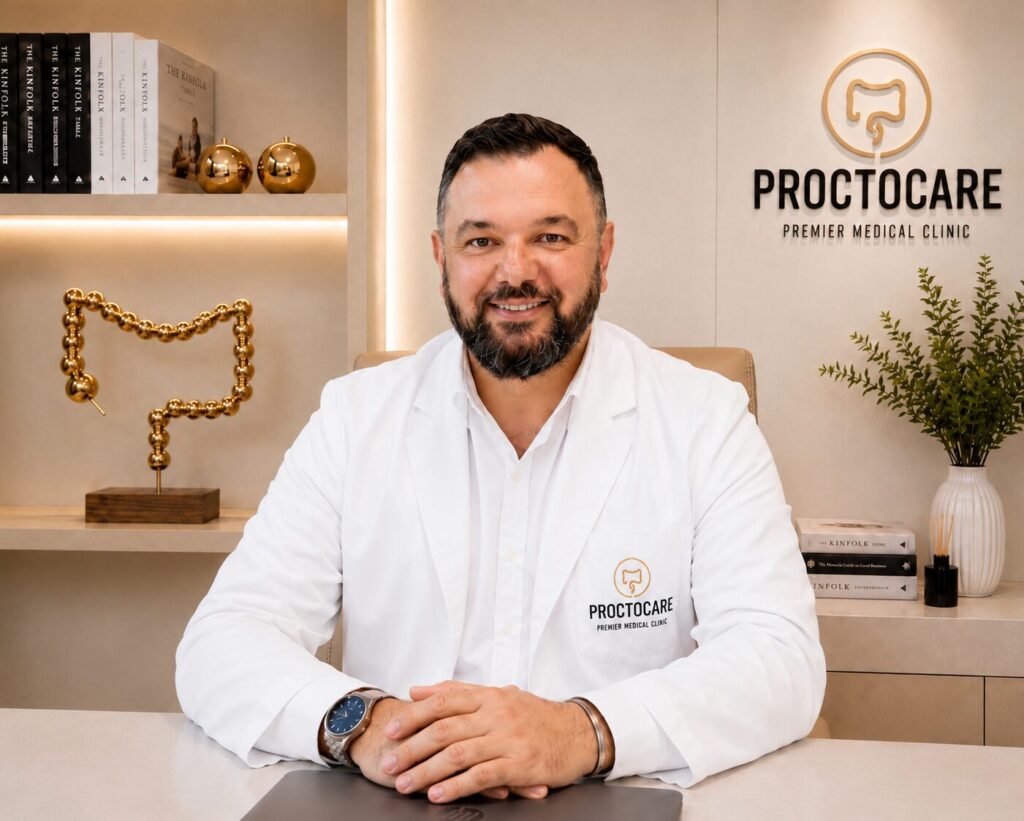
MUDr. Manuchekhr Burkhanov
Proctologist · office: Bratislava
He focuses on the diagnosis and outpatient treatment of proctological conditions – hemorrhoids, anal fissure and other disorders of the rectum – with a discreet and individual approach. He communicates with patients in Slovak, Russian and English.
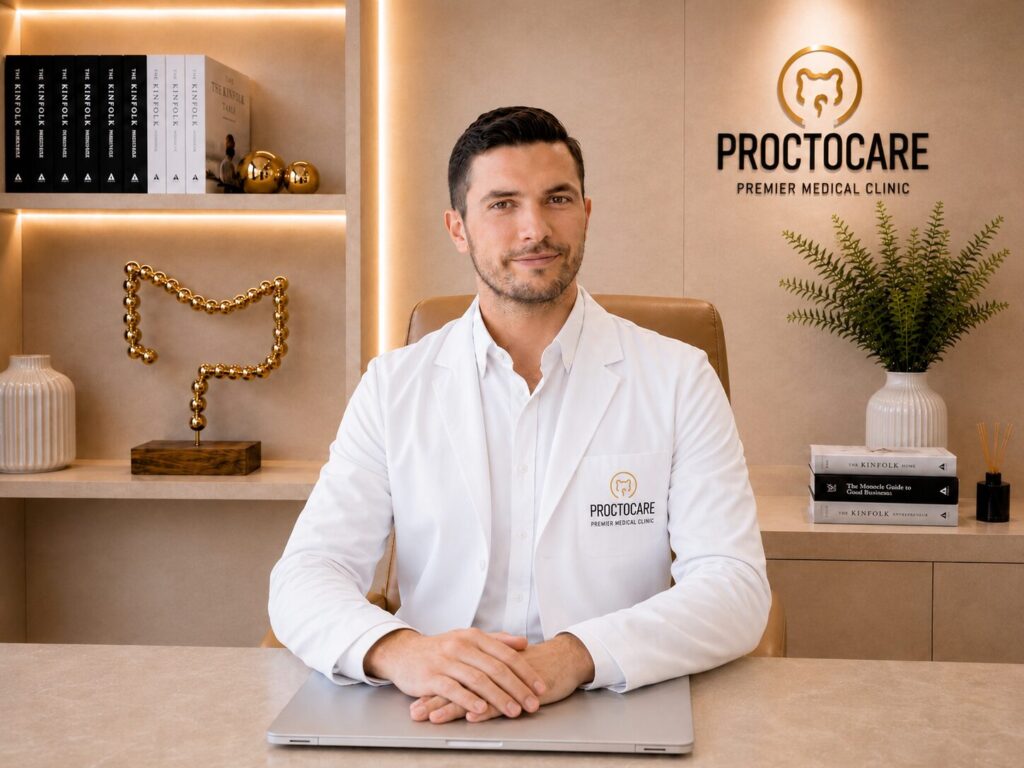
MUDr. Matúš Kačeriak
Surgeon – proctologist · office: Žilina
At the Proctocare office in Žilina you will be cared for by MUDr. Matúš Kačeriak – a surgeon at the surgical department of the FNsP Žilina hospital. He focuses on proctological examinations, diagnosis of rectal disorders and minimally invasive proctological procedures with an emphasis on precise diagnosis and individual care.
Author and medical review: Your health is in the hands of MUDr. Karim Masalkhi – founder and head physician of the Proctocare clinic, a proctologist with more than 20 years of experience and over 2000 treated patients. · Last medical review: July 2026
Noticed growths at the anus?
Book a discreet examination – an appointment within 24 hours, an outpatient solution with no hospital stay.
Bratislava: Bernolákova 9, 811 07 (STEIN II) · Mon–Fri 07:30–19:30, Sat 07:30–12:30
Žilina: Alexandra Rudnaya 100, 010 01 · by appointment
info@proctocare.sk