
Anal fissure surgery with laser and botulinum toxin
A chronic anal fissure that does not respond to ointments and conservative treatment often will not heal on its own. The modern solution is minimally invasive laser surgery combined with an injection of botulinum toxin — outpatient, under local anesthesia and with sphincter function preserved. The procedure is led by MUDr. Karim Masalkhi, an experienced proctologist with over 2000 successfully operated patients.
- The surgeon is MUDr. Karim Masalkhi, a specialist in the surgical treatment of anorectal conditions
- A minimally invasive procedure under local anesthesia, no hospital stay
- An appointment within 24 hours, including weekends and holidays
Bratislava – Bernolákova 9 (STEIN II) | Žilina – Alexandra Rudnaya 100
What anal fissure surgery is
Anal fissure surgery at our clinic combines two gentle techniques. The laser treats the edges of the chronic fissure — it removes the hardened, poorly healing tissue and encourages the formation of a healthy, well-supplied wound that is able to heal. Botulinum toxin injected into the anal sphincter temporarily relaxes its excessive tension, which is the main cause of poor healing. This breaks the vicious circle: pain triggers sphincter spasm, the spasm worsens the blood supply, and a poorly supplied fissure cannot heal.
The procedure is done on an outpatient basis under local anesthesia, takes approximately 15 to 20 minutes, and you go home the same day. Unlike classic surgery, the sphincter is not cut, so its function and continence are preserved as much as possible. The procedure is led by MUDr. Karim Masalkhi, who has long specialized in proctology and the surgical treatment of anorectal conditions. We are a private clinic — you do not need a referral, and we offer appointments even within 24 hours.
Who the procedure is suitable for
The doctor decides whether surgery is right for you after the initial examination
- Patients with a chronic anal fissure that has not healed for weeks to months
- Patients for whom conservative treatment has failed — ointments, sitz baths and softer stool
- Patients with a repeatedly returning fissure and persistent sphincter spasm
- Those whose sharp pain during bowel movements and fear of emptying limit their everyday life
Not sure whether it is a fissure? Similar problems can also be caused by hemorrhoids or other anorectal conditions. The doctor makes the exact diagnosis at the initial examination — you can read more about the condition on the page anal fissure.
How the surgery works
From the examination to going home the same day
1. Examination and treatment plan
At the initial examination the doctor confirms the chronic fissure, rules out other anorectal conditions and proposes the date and course of the procedure.
2. Local anesthesia
The area of the procedure is thoroughly numbed with local anesthesia. No general anesthesia or hospital stay is needed.
3. Laser and botulinum toxin
The laser gently treats the edges of the fissure and removes the poorly healing tissue. Botulinum toxin is injected into the sphincter, relaxing the spasm and allowing healing.
4. Going home
The whole procedure takes approximately 15 to 20 minutes. After a short recovery you go home the same day with instructions on caring for the wound.
Advantages of laser surgery with botulinum toxin
A minimally invasive, gentle procedure
The laser works precisely and gently, with no extensive surgical wound and with minimal post-operative pain.
The sphincter is preserved
Unlike classic surgery, the sphincter is not cut — botulinum toxin relaxes it only temporarily; function and continence remain intact.
A quick procedure with no hospital stay
The procedure takes approximately 15 to 20 minutes, is done on an outpatient basis under local anesthesia, and you go home the same day.
It addresses the cause, not just the symptom
Botulinum toxin breaks the vicious circle of spasm and poor blood supply; the laser prepares the edges of the fissure for healthy healing.
A fast return to activities
Most patients return to everyday activities within a few days and feel an improvement in the very first weeks.
An experienced surgeon
The procedure is led by MUDr. Karim Masalkhi with more than 20 years of experience and over 2000 successfully operated patients.
Preparing for the procedure
The preparation is simple; you will receive exact instructions in advance
- The procedure is preceded by an initial proctological examination at which the doctor confirms the indication
- Inform the doctor in advance about any medication you take, especially blood thinners, and about allergies
- On the day of the procedure a lighter meal is fine — no general anesthesia is needed, so you do not have to come with an empty stomach
- Depending on the doctor's instructions, gentle bowel emptying before the procedure may be appropriate
- We recommend an escort for the journey home, although most patients manage leaving without problems
Recovery and healing
The first days
After the anesthesia wears off there may be mild pain or burning, which responds well to common painkillers. You return to undemanding activities within a few days.
The first follow-up
The follow-up with the doctor takes place after about one week. The doctor checks the healing of the wound and adjusts the recommendations.
The first weeks
The botulinum toxin relaxes the sphincter and the pain during bowel movements gradually eases. Most patients feel a marked improvement in the very first weeks.
Complete healing
Complete healing of the fissure takes approximately 12 to 20 weeks, depending on its extent, the sphincter tension and lifestyle.
Recommendations after the surgery
- Keep your stool soft and regular — enough fiber, fluids and exercise
- Avoid straining during bowel movements and sitting on the toilet for a long time
- Keep the area clean as instructed by the doctor; sitz baths also help
- Limit heavy lifting and intense sport for the first weeks
- Take the prescribed medication and come to the follow-up after about a week
If heavy bleeding, increasing pain or fever appears, contact us at +421 948 687 667 — we have acute appointments within 24 hours, including weekends and holidays.
Frequently asked questions about anal fissure surgery
No. The procedure is done under local anesthesia, and most patients manage it without any major problems. After the anesthesia wears off there may be mild pain, which responds well to common painkillers.
The procedure itself takes approximately 15 to 20 minutes. No hospital stay is needed — it is an outpatient procedure and you go home the same day.
Botulinum toxin injected into the anal sphincter temporarily relaxes its excessive tension. This breaks the vicious circle in which sphincter spasm worsens the blood supply and prevents the fissure from healing. The relaxed sphincter allows the wound to heal, and its function then returns to normal.
Unlike classic surgery, the sphincter is not cut, so its function is preserved as much as possible. The effect of the botulinum toxin is temporary and controlled — the aim is only to relax the excessive spasm, not to weaken the sphincter permanently.
The first follow-up takes place after about a week, and patients usually feel an improvement within the first weeks. Complete healing of the fissure takes approximately 12 to 20 weeks, depending on its extent, the sphincter tension and lifestyle.
With untreated constipation or an unsuitable lifestyle the problem can recur. An important part of the treatment is therefore prevention — soft, regular stool and enough fiber and fluids. You will receive recommendations from MUDr. Masalkhi at the follow-up.
Related topics
Anal fissure
Symptoms, causes and treatment options for an anal fissure — from conservative measures to a minimally invasive procedure.
Hemorrhoids
Pain and bleeding during bowel movements can also be caused by hemorrhoids. Read about the symptoms and treatment options.
Laser hemorrhoid surgery LHP®
A modern laser method for treating hemorrhoids under local anesthesia. The first in Slovakia.
Who will take care of you
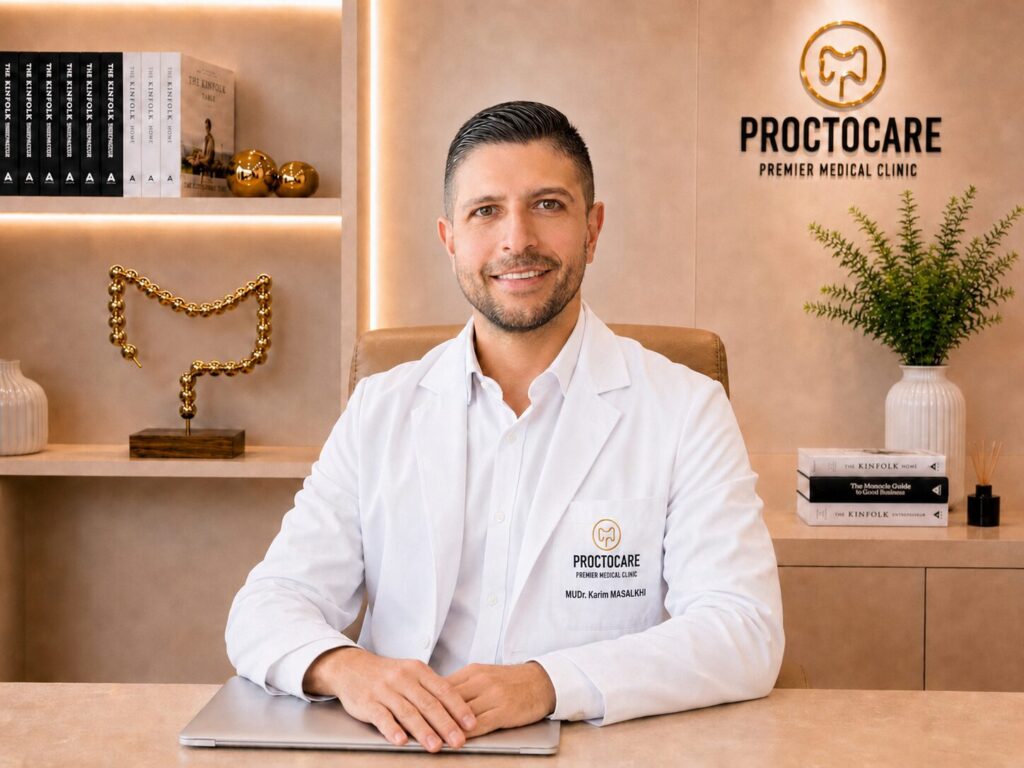
MUDr. Karim Masalkhi
Founder and head physician of the Proctocare clinic · surgeon – proctologist
A recognized specialist with more than 20 years of experience in minimally invasive proctology and laser surgery, with over 2000 successfully operated patients. He regularly attends training placements abroad focused on the most modern techniques of minimally invasive surgery, proctology and surgical oncology.
- Certified in the LHP® method – he was the first to bring laser surgery of hemorrhoids and anal fissures to Slovakia
- A specialist in correcting unsuccessful proctological surgeries of hemorrhoids and anal fissures
- He personally guarantees expertise, safety and a considerate approach to every patient

MUDr. Manuchekhr Burkhanov
Proctologist · office: Bratislava
He focuses on the diagnosis and outpatient treatment of proctological conditions – hemorrhoids, anal fissure and other disorders of the rectum – with a discreet and individual approach. He communicates with patients in Slovak, Russian and English.

MUDr. Matúš Kačeriak
Surgeon – proctologist · office: Žilina
At the Proctocare office in Žilina you will be cared for by MUDr. Matúš Kačeriak – a surgeon at the surgical department of the FNsP Žilina hospital. He focuses on proctological examinations, diagnosis of rectal disorders and minimally invasive proctological procedures with an emphasis on precise diagnosis and individual care.
Author and medical review: Your health is in the hands of MUDr. Karim Masalkhi – founder and head physician of the Proctocare clinic, a proctologist with more than 20 years of experience and over 2000 treated patients. · Last medical review: July 2026
End the pain during bowel movements — book anal fissure treatment
A discreet examination with MUDr. Masalkhi, an appointment within 24 hours, no referral needed.
Bratislava: Bernolákova 9, 811 07 (STEIN II) · Mon–Fri 07:30–19:30, Sat 07:30–12:30
Žilina: Alexandra Rudnaya 100, 010 01 · by appointment
info@proctocare.sk
Anal fissure surgery with laser and botulinum toxin
A chronic anal fissure that does not respond to ointments and conservative treatment often will not heal on its own. The modern solution is minimally invasive laser surgery combined with an injection of botulinum toxin — outpatient, under local anesthesia and with sphincter function preserved. The procedure is led by MUDr. Karim Masalkhi, an experienced proctologist with over 2000 successfully operated patients.
- The surgeon is MUDr. Karim Masalkhi, a specialist in the surgical treatment of anorectal conditions
- A minimally invasive procedure under local anesthesia, no hospital stay
- An appointment within 24 hours, including weekends and holidays
Bratislava – Bernolákova 9 (STEIN II) | Žilina – Alexandra Rudnaya 100
What anal fissure surgery is
Anal fissure surgery at our clinic combines two gentle techniques. The laser treats the edges of the chronic fissure — it removes the hardened, poorly healing tissue and encourages the formation of a healthy, well-supplied wound that is able to heal. Botulinum toxin injected into the anal sphincter temporarily relaxes its excessive tension, which is the main cause of poor healing. This breaks the vicious circle: pain triggers sphincter spasm, the spasm worsens the blood supply, and a poorly supplied fissure cannot heal.
The procedure is done on an outpatient basis under local anesthesia, takes approximately 15 to 20 minutes, and you go home the same day. Unlike classic surgery, the sphincter is not cut, so its function and continence are preserved as much as possible. The procedure is led by MUDr. Karim Masalkhi, who has long specialized in proctology and the surgical treatment of anorectal conditions. We are a private clinic — you do not need a referral, and we offer appointments even within 24 hours.
Who the procedure is suitable for
The doctor decides whether surgery is right for you after the initial examination
- Patients with a chronic anal fissure that has not healed for weeks to months
- Patients for whom conservative treatment has failed — ointments, sitz baths and softer stool
- Patients with a repeatedly returning fissure and persistent sphincter spasm
- Those whose sharp pain during bowel movements and fear of emptying limit their everyday life
Not sure whether it is a fissure? Similar problems can also be caused by hemorrhoids or other anorectal conditions. The doctor makes the exact diagnosis at the initial examination — you can read more about the condition on the page anal fissure.
How the surgery works
From the examination to going home the same day
1. Examination and treatment plan
At the initial examination the doctor confirms the chronic fissure, rules out other anorectal conditions and proposes the date and course of the procedure.
2. Local anesthesia
The area of the procedure is thoroughly numbed with local anesthesia. No general anesthesia or hospital stay is needed.
3. Laser and botulinum toxin
The laser gently treats the edges of the fissure and removes the poorly healing tissue. Botulinum toxin is injected into the sphincter, relaxing the spasm and allowing healing.
4. Going home
The whole procedure takes approximately 15 to 20 minutes. After a short recovery you go home the same day with instructions on caring for the wound.
Advantages of laser surgery with botulinum toxin
A minimally invasive, gentle procedure
The laser works precisely and gently, with no extensive surgical wound and with minimal post-operative pain.
The sphincter is preserved
Unlike classic surgery, the sphincter is not cut — botulinum toxin relaxes it only temporarily; function and continence remain intact.
A quick procedure with no hospital stay
The procedure takes approximately 15 to 20 minutes, is done on an outpatient basis under local anesthesia, and you go home the same day.
It addresses the cause, not just the symptom
Botulinum toxin breaks the vicious circle of spasm and poor blood supply; the laser prepares the edges of the fissure for healthy healing.
A fast return to activities
Most patients return to everyday activities within a few days and feel an improvement in the very first weeks.
An experienced surgeon
The procedure is led by MUDr. Karim Masalkhi with more than 20 years of experience and over 2000 successfully operated patients.
Preparing for the procedure
The preparation is simple; you will receive exact instructions in advance
- The procedure is preceded by an initial proctological examination at which the doctor confirms the indication
- Inform the doctor in advance about any medication you take, especially blood thinners, and about allergies
- On the day of the procedure a lighter meal is fine — no general anesthesia is needed, so you do not have to come with an empty stomach
- Depending on the doctor's instructions, gentle bowel emptying before the procedure may be appropriate
- We recommend an escort for the journey home, although most patients manage leaving without problems
Recovery and healing
The first days
After the anesthesia wears off there may be mild pain or burning, which responds well to common painkillers. You return to undemanding activities within a few days.
The first follow-up
The follow-up with the doctor takes place after about one week. The doctor checks the healing of the wound and adjusts the recommendations.
The first weeks
The botulinum toxin relaxes the sphincter and the pain during bowel movements gradually eases. Most patients feel a marked improvement in the very first weeks.
Complete healing
Complete healing of the fissure takes approximately 12 to 20 weeks, depending on its extent, the sphincter tension and lifestyle.
Recommendations after the surgery
- Keep your stool soft and regular — enough fiber, fluids and exercise
- Avoid straining during bowel movements and sitting on the toilet for a long time
- Keep the area clean as instructed by the doctor; sitz baths also help
- Limit heavy lifting and intense sport for the first weeks
- Take the prescribed medication and come to the follow-up after about a week
If heavy bleeding, increasing pain or fever appears, contact us at +421 948 687 667 — we have acute appointments within 24 hours, including weekends and holidays.
Frequently asked questions about anal fissure surgery
No. The procedure is done under local anesthesia, and most patients manage it without any major problems. After the anesthesia wears off there may be mild pain, which responds well to common painkillers.
The procedure itself takes approximately 15 to 20 minutes. No hospital stay is needed — it is an outpatient procedure and you go home the same day.
Botulinum toxin injected into the anal sphincter temporarily relaxes its excessive tension. This breaks the vicious circle in which sphincter spasm worsens the blood supply and prevents the fissure from healing. The relaxed sphincter allows the wound to heal, and its function then returns to normal.
Unlike classic surgery, the sphincter is not cut, so its function is preserved as much as possible. The effect of the botulinum toxin is temporary and controlled — the aim is only to relax the excessive spasm, not to weaken the sphincter permanently.
The first follow-up takes place after about a week, and patients usually feel an improvement within the first weeks. Complete healing of the fissure takes approximately 12 to 20 weeks, depending on its extent, the sphincter tension and lifestyle.
With untreated constipation or an unsuitable lifestyle the problem can recur. An important part of the treatment is therefore prevention — soft, regular stool and enough fiber and fluids. You will receive recommendations from MUDr. Masalkhi at the follow-up.
Related topics
Anal fissure
Symptoms, causes and treatment options for an anal fissure — from conservative measures to a minimally invasive procedure.
Hemorrhoids
Pain and bleeding during bowel movements can also be caused by hemorrhoids. Read about the symptoms and treatment options.
Laser hemorrhoid surgery LHP®
A modern laser method for treating hemorrhoids under local anesthesia. The first in Slovakia.
Who will take care of you

MUDr. Karim Masalkhi
Founder and head physician of the Proctocare clinic · surgeon – proctologist
A recognized specialist with more than 20 years of experience in minimally invasive proctology and laser surgery, with over 2000 successfully operated patients. He regularly attends training placements abroad focused on the most modern techniques of minimally invasive surgery, proctology and surgical oncology.
- Certified in the LHP® method – he was the first to bring laser surgery of hemorrhoids and anal fissures to Slovakia
- A specialist in correcting unsuccessful proctological surgeries of hemorrhoids and anal fissures
- He personally guarantees expertise, safety and a considerate approach to every patient

MUDr. Manuchekhr Burkhanov
Proctologist · office: Bratislava
He focuses on the diagnosis and outpatient treatment of proctological conditions – hemorrhoids, anal fissure and other disorders of the rectum – with a discreet and individual approach. He communicates with patients in Slovak, Russian and English.

MUDr. Matúš Kačeriak
Surgeon – proctologist · office: Žilina
At the Proctocare office in Žilina you will be cared for by MUDr. Matúš Kačeriak – a surgeon at the surgical department of the FNsP Žilina hospital. He focuses on proctological examinations, diagnosis of rectal disorders and minimally invasive proctological procedures with an emphasis on precise diagnosis and individual care.
Author and medical review: Your health is in the hands of MUDr. Karim Masalkhi – founder and head physician of the Proctocare clinic, a proctologist with more than 20 years of experience and over 2000 treated patients. · Last medical review: July 2026
End the pain during bowel movements — book anal fissure treatment
A discreet examination with MUDr. Masalkhi, an appointment within 24 hours, no referral needed.
Bratislava: Bernolákova 9, 811 07 (STEIN II) · Mon–Fri 07:30–19:30, Sat 07:30–12:30
Žilina: Alexandra Rudnaya 100, 010 01 · by appointment
info@proctocare.sk
Anal fissure surgery with laser and botulinum toxin
A chronic anal fissure that does not respond to ointments and conservative treatment often will not heal on its own. The modern solution is minimally invasive laser surgery combined with an injection of botulinum toxin — outpatient, under local anesthesia and with sphincter function preserved. The procedure is led by MUDr. Karim Masalkhi, an experienced proctologist with over 2000 successfully operated patients.
- The surgeon is MUDr. Karim Masalkhi, a specialist in the surgical treatment of anorectal conditions
- A minimally invasive procedure under local anesthesia, no hospital stay
- An appointment within 24 hours, including weekends and holidays
Bratislava – Bernolákova 9 (STEIN II) | Žilina – Alexandra Rudnaya 100
What anal fissure surgery is
Anal fissure surgery at our clinic combines two gentle techniques. The laser treats the edges of the chronic fissure — it removes the hardened, poorly healing tissue and encourages the formation of a healthy, well-supplied wound that is able to heal. Botulinum toxin injected into the anal sphincter temporarily relaxes its excessive tension, which is the main cause of poor healing. This breaks the vicious circle: pain triggers sphincter spasm, the spasm worsens the blood supply, and a poorly supplied fissure cannot heal.
The procedure is done on an outpatient basis under local anesthesia, takes approximately 15 to 20 minutes, and you go home the same day. Unlike classic surgery, the sphincter is not cut, so its function and continence are preserved as much as possible. The procedure is led by MUDr. Karim Masalkhi, who has long specialized in proctology and the surgical treatment of anorectal conditions. We are a private clinic — you do not need a referral, and we offer appointments even within 24 hours.
Who the procedure is suitable for
The doctor decides whether surgery is right for you after the initial examination
- Patients with a chronic anal fissure that has not healed for weeks to months
- Patients for whom conservative treatment has failed — ointments, sitz baths and softer stool
- Patients with a repeatedly returning fissure and persistent sphincter spasm
- Those whose sharp pain during bowel movements and fear of emptying limit their everyday life
Not sure whether it is a fissure? Similar problems can also be caused by hemorrhoids or other anorectal conditions. The doctor makes the exact diagnosis at the initial examination — you can read more about the condition on the page anal fissure.
How the surgery works
From the examination to going home the same day
1. Examination and treatment plan
At the initial examination the doctor confirms the chronic fissure, rules out other anorectal conditions and proposes the date and course of the procedure.
2. Local anesthesia
The area of the procedure is thoroughly numbed with local anesthesia. No general anesthesia or hospital stay is needed.
3. Laser and botulinum toxin
The laser gently treats the edges of the fissure and removes the poorly healing tissue. Botulinum toxin is injected into the sphincter, relaxing the spasm and allowing healing.
4. Going home
The whole procedure takes approximately 15 to 20 minutes. After a short recovery you go home the same day with instructions on caring for the wound.
Advantages of laser surgery with botulinum toxin
A minimally invasive, gentle procedure
The laser works precisely and gently, with no extensive surgical wound and with minimal post-operative pain.
The sphincter is preserved
Unlike classic surgery, the sphincter is not cut — botulinum toxin relaxes it only temporarily; function and continence remain intact.
A quick procedure with no hospital stay
The procedure takes approximately 15 to 20 minutes, is done on an outpatient basis under local anesthesia, and you go home the same day.
It addresses the cause, not just the symptom
Botulinum toxin breaks the vicious circle of spasm and poor blood supply; the laser prepares the edges of the fissure for healthy healing.
A fast return to activities
Most patients return to everyday activities within a few days and feel an improvement in the very first weeks.
An experienced surgeon
The procedure is led by MUDr. Karim Masalkhi with more than 20 years of experience and over 2000 successfully operated patients.
Preparing for the procedure
The preparation is simple; you will receive exact instructions in advance
- The procedure is preceded by an initial proctological examination at which the doctor confirms the indication
- Inform the doctor in advance about any medication you take, especially blood thinners, and about allergies
- On the day of the procedure a lighter meal is fine — no general anesthesia is needed, so you do not have to come with an empty stomach
- Depending on the doctor's instructions, gentle bowel emptying before the procedure may be appropriate
- We recommend an escort for the journey home, although most patients manage leaving without problems
Recovery and healing
The first days
After the anesthesia wears off there may be mild pain or burning, which responds well to common painkillers. You return to undemanding activities within a few days.
The first follow-up
The follow-up with the doctor takes place after about one week. The doctor checks the healing of the wound and adjusts the recommendations.
The first weeks
The botulinum toxin relaxes the sphincter and the pain during bowel movements gradually eases. Most patients feel a marked improvement in the very first weeks.
Complete healing
Complete healing of the fissure takes approximately 12 to 20 weeks, depending on its extent, the sphincter tension and lifestyle.
Recommendations after the surgery
- Keep your stool soft and regular — enough fiber, fluids and exercise
- Avoid straining during bowel movements and sitting on the toilet for a long time
- Keep the area clean as instructed by the doctor; sitz baths also help
- Limit heavy lifting and intense sport for the first weeks
- Take the prescribed medication and come to the follow-up after about a week
If heavy bleeding, increasing pain or fever appears, contact us at +421 948 687 667 — we have acute appointments within 24 hours, including weekends and holidays.
Frequently asked questions about anal fissure surgery
No. The procedure is done under local anesthesia, and most patients manage it without any major problems. After the anesthesia wears off there may be mild pain, which responds well to common painkillers.
The procedure itself takes approximately 15 to 20 minutes. No hospital stay is needed — it is an outpatient procedure and you go home the same day.
Botulinum toxin injected into the anal sphincter temporarily relaxes its excessive tension. This breaks the vicious circle in which sphincter spasm worsens the blood supply and prevents the fissure from healing. The relaxed sphincter allows the wound to heal, and its function then returns to normal.
Unlike classic surgery, the sphincter is not cut, so its function is preserved as much as possible. The effect of the botulinum toxin is temporary and controlled — the aim is only to relax the excessive spasm, not to weaken the sphincter permanently.
The first follow-up takes place after about a week, and patients usually feel an improvement within the first weeks. Complete healing of the fissure takes approximately 12 to 20 weeks, depending on its extent, the sphincter tension and lifestyle.
With untreated constipation or an unsuitable lifestyle the problem can recur. An important part of the treatment is therefore prevention — soft, regular stool and enough fiber and fluids. You will receive recommendations from MUDr. Masalkhi at the follow-up.
Related topics
Anal fissure
Symptoms, causes and treatment options for an anal fissure — from conservative measures to a minimally invasive procedure.
Hemorrhoids
Pain and bleeding during bowel movements can also be caused by hemorrhoids. Read about the symptoms and treatment options.
Laser hemorrhoid surgery LHP®
A modern laser method for treating hemorrhoids under local anesthesia. The first in Slovakia.
Who will take care of you
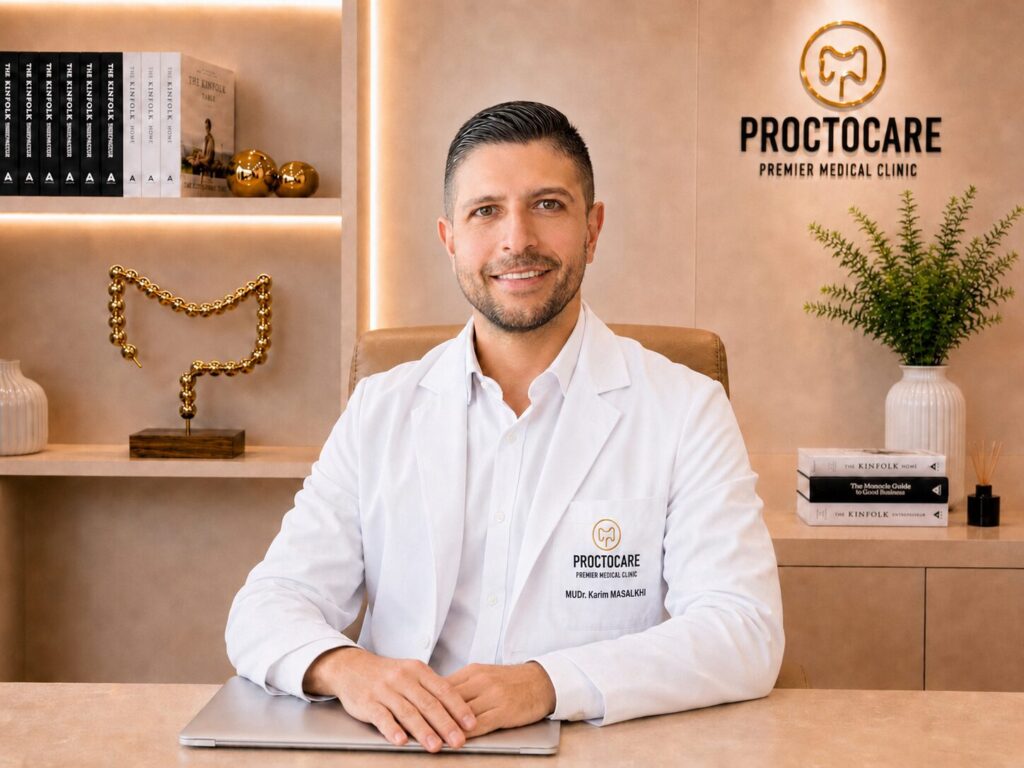
MUDr. Karim Masalkhi
Founder and head physician of the Proctocare clinic · surgeon – proctologist
A recognized specialist with more than 20 years of experience in minimally invasive proctology and laser surgery, with over 2000 successfully operated patients. He regularly attends training placements abroad focused on the most modern techniques of minimally invasive surgery, proctology and surgical oncology.
- Certified in the LHP® method – he was the first to bring laser surgery of hemorrhoids and anal fissures to Slovakia
- A specialist in correcting unsuccessful proctological surgeries of hemorrhoids and anal fissures
- He personally guarantees expertise, safety and a considerate approach to every patient

MUDr. Manuchekhr Burkhanov
Proctologist · office: Bratislava
He focuses on the diagnosis and outpatient treatment of proctological conditions – hemorrhoids, anal fissure and other disorders of the rectum – with a discreet and individual approach. He communicates with patients in Slovak, Russian and English.

MUDr. Matúš Kačeriak
Surgeon – proctologist · office: Žilina
At the Proctocare office in Žilina you will be cared for by MUDr. Matúš Kačeriak – a surgeon at the surgical department of the FNsP Žilina hospital. He focuses on proctological examinations, diagnosis of rectal disorders and minimally invasive proctological procedures with an emphasis on precise diagnosis and individual care.
Author and medical review: Your health is in the hands of MUDr. Karim Masalkhi – founder and head physician of the Proctocare clinic, a proctologist with more than 20 years of experience and over 2000 treated patients. · Last medical review: July 2026
End the pain during bowel movements — book anal fissure treatment
A discreet examination with MUDr. Masalkhi, an appointment within 24 hours, no referral needed.
Bratislava: Bernolákova 9, 811 07 (STEIN II) · Mon–Fri 07:30–19:30, Sat 07:30–12:30
Žilina: Alexandra Rudnaya 100, 010 01 · by appointment
info@proctocare.sk