
Ulcerative colitis
Ulcerative colitis is a chronic inflammatory disease of the colon from the IBD group. It manifests mainly as diarrhea with blood, abdominal cramps and fatigue. At Proctocare in Bratislava, the diagnosis and treatment of IBD are handled by MUDr. Tomáš Zamborský, who has long specialized in inflammatory bowel diseases.
- MUDr. Tomáš Zamborský has long specialized in inflammatory bowel diseases (IBD)
- Colonoscopy with tissue sampling within a few days, under sedation
- Complete diagnostics in one place – calprotectin, blood tests and endoscopy
- We speak English
Bratislava – Bernolákova 9 (STEIN II)
What ulcerative colitis is
Ulcerative colitis, together with Crohn’s disease, belongs to the inflammatory bowel diseases (IBD). The inflammation affects the lining of the colon – it typically starts in the rectum and spreads continuously upwards. Small ulcers form on the inflamed lining and bleed, which is why blood in the stool is one of the most common symptoms.
The disease runs in waves: periods of active inflammation (relapses) alternate with calm periods (remissions), which can last months to years. It most often first appears between the ages of 15 and 35. Ulcerative colitis cannot be completely cured, but with properly set-up treatment it can be kept in long-term remission – most patients live a full life.
Symptoms of ulcerative colitis
The intensity of the complaints depends on the extent and activity of the inflammation – from mild to exhausting.
- Recurrent diarrhea, often with blood and mucus
- Cramping abdominal pain, typically in the lower left abdomen
- A sudden and urgent need to pass stool
- Fatigue and general weakness, often due to anemia
- Unintended weight loss and reduced appetite
- With active inflammation, also a raised temperature
Causes and risk factors
The exact cause of ulcerative colitis is not known. It is a disorder of immune system regulation – the immune system reacts inappropriately to the body’s own bowel lining and gut microbiome, thereby maintaining chronic inflammation. Genetic predisposition (IBD in the family increases the risk) and environmental factors both play a role.
The disease is not caused by diet or stress – these can, however, worsen its course. It is important to know that years of untreated inflammation of the colon increase the risk of colon cancer, which is why regular endoscopic monitoring is part of treatment.
Diagnosis of ulcerative colitis at our center
The basis is a detailed discussion, a physical examination and laboratory tests – a blood count to detect anemia, biochemical screening and, above all, fecal calprotectin, a sensitive marker of bowel inflammation that helps distinguish IBD from functional complaints.
The diagnosis is definitively confirmed by colonoscopy with sampling of the lining for histological examination. You usually have an appointment within a few days, and thanks to sedation it takes place with minimal discomfort. Calprotectin and colonoscopy then also serve for long-term monitoring of disease activity.
Treatment of ulcerative colitis at our center
The goal of treatment is to heal the inflammation, induce remission and maintain it for as long as possible.
Biological therapy – we prepare and refer
Biological therapy is administered in specialized biological therapy centers. If your condition requires it, we prepare complete documentation, refer you to the appropriate center and continue to follow you up.
Lifestyle and supportive treatment
We advise you on diet during relapse and remission, supplement iron or vitamins in case of anemia and help you manage the disease in everyday life.
We provide outpatient diagnosis, setting up of treatment and long-term follow-up at our center; biological therapy belongs to biological therapy centers, to which we refer you fully prepared if needed.
When you should definitely see a doctor
Never put off the following symptoms – they may signal an inflammatory bowel disease or its flare-up:
- Blood in the stool or recurrent bloody diarrhea
- Diarrhea lasting more than two weeks
- Abdominal cramps accompanied by a temperature
- Unintended weight loss and increasing fatigue
- Diarrhea that wakes you from sleep
- Worsening of complaints despite established treatment
Frequently asked questions about ulcerative colitis
It cannot yet be completely cured; it is a chronic disease. With properly set-up treatment, however, remission can be induced and maintained long-term – a period without complaints that can last for years. Most patients live a full working and family life.
Both belong to the inflammatory bowel diseases (IBD). Ulcerative colitis affects only the colon and the inflammation is continuous in the lining, whereas Crohn’s disease can affect any part of the digestive tract and the inflammation involves the whole bowel wall. Colonoscopy with histology helps to tell them apart.
We start with an examination and consultation, laboratory tests and fecal calprotectin. The diagnosis is confirmed by colonoscopy with biopsies, for which you usually have an appointment at our center within a few days, with the option of sedation.
Calprotectin is a protein released into the stool by inflammatory cells in the bowel. Its level closely reflects the activity of the inflammation, so we use it not only for diagnosis but also for long-term monitoring of whether treatment is working – this often avoids an unnecessary colonoscopy.
Biological therapy is considered when standard treatment does not control the inflammation sufficiently. It is administered in specialized biological therapy centers.
Years of active inflammation increase the risk, which is why regular endoscopic monitoring with tissue sampling is part of care. A well-treated disease in remission considerably reduces the risk – another reason not to underestimate treatment.
Related topics
Crohn's disease
The second of the inflammatory bowel diseases – how it differs from ulcerative colitis and how we diagnose it.
Colonoscopy
The key examination when IBD is suspected – at our center within a few days and under sedation.
Constipation and diarrhea
When a change in stool is only temporary and when it deserves an examination by a gastroenterologist.
Who will take care of you
Gastroenterologist · lead specialist for gastroenterology at Proctocare
MUDr. Tomáš Zamborský specializes in the diagnosis and treatment of diseases of the digestive tract, with an emphasis on precise diagnostics and an individual approach. He has also long specialized in inflammatory bowel diseases (Crohn’s disease, ulcerative colitis).
- Gastroenterologist with more than 20 years of experience
- Gastroenterology Clinic of the Slovak Medical University and the University Hospital Bratislava
- Publishing and lecturing activity in the field
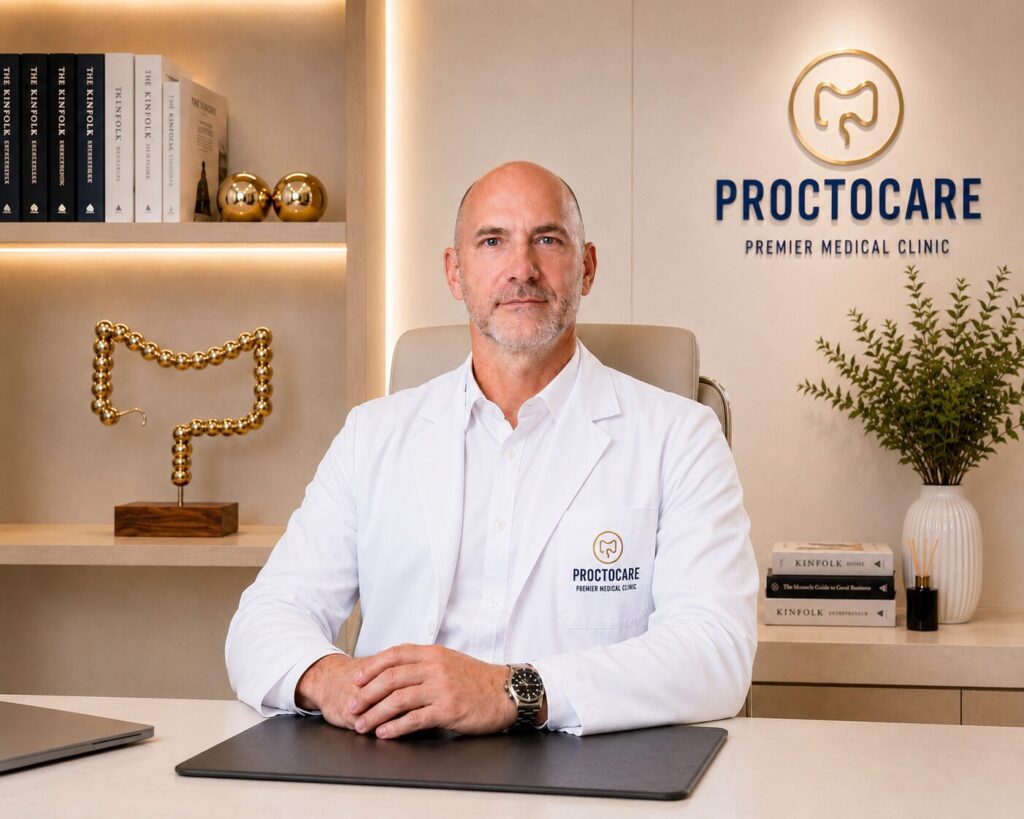
Gastroenterologist · head of the endoscopy unit at the University Hospital Bratislava (UNB)
A gastroenterologist with more than 30 years of experience in digestive endoscopy. He specializes in gastroscopy, colonoscopy and advanced endoscopic procedures.
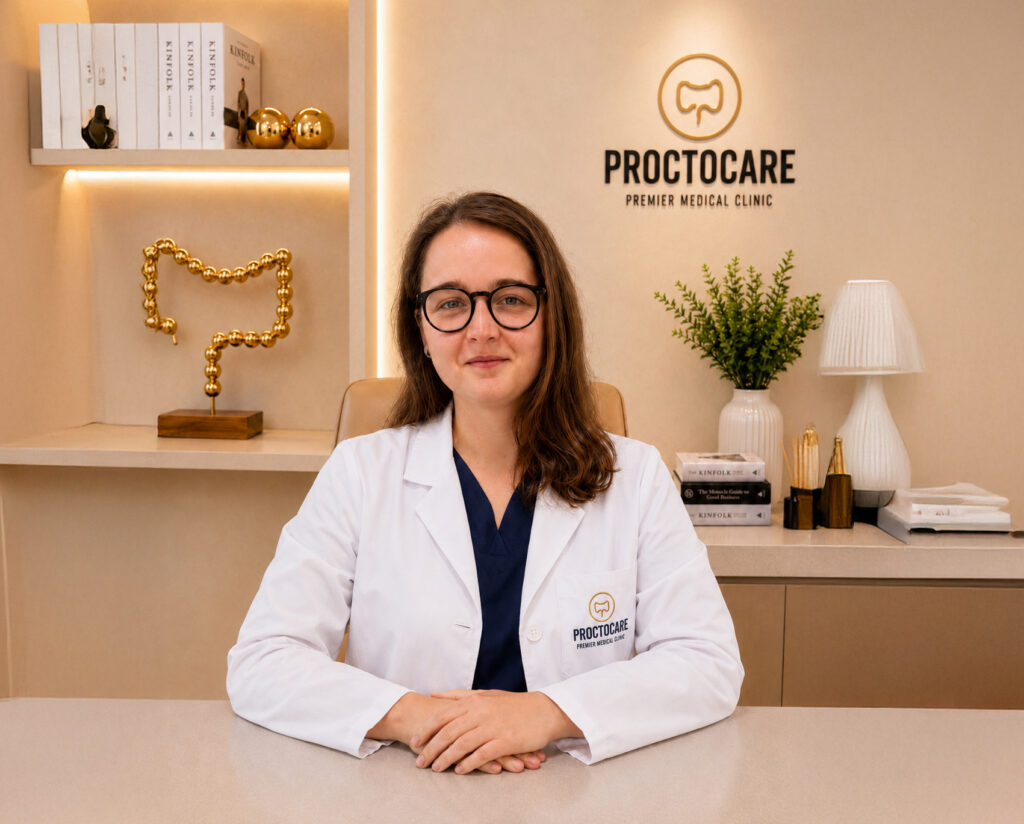
Gastroenterologist · Bratislava office
She specializes in the diagnosis and treatment of diseases of the digestive tract, including endoscopic examinations and functional gastroenterology, with an emphasis on patient comfort during the examination.
Author and medical review: MUDr. Tomáš Zamborský – gastroenterologist with more than 20 years of experience, head medical guarantor of gastroenterology at Proctocare. · Last medical review: July 2026
Suspect an inflammatory bowel disease?
Book an examination – Bratislava, no referral needed and no long wait. Call +421 948 687 667.
Bratislava: Bernolákova 9, 811 07 (STEIN II) · Mon–Fri 07:30–19:30, Sat 07:30–12:30
info@proctocare.sk
Ulcerative colitis
Ulcerative colitis is a chronic inflammatory disease of the colon from the IBD group. It manifests mainly as diarrhea with blood, abdominal cramps and fatigue. At Proctocare in Bratislava, the diagnosis and treatment of IBD are handled by MUDr. Tomáš Zamborský, who has long specialized in inflammatory bowel diseases.
- MUDr. Tomáš Zamborský has long specialized in inflammatory bowel diseases (IBD)
- Colonoscopy with tissue sampling within a few days, under sedation
- Complete diagnostics in one place – calprotectin, blood tests and endoscopy
- We speak English
Bratislava – Bernolákova 9 (STEIN II)
What ulcerative colitis is
Ulcerative colitis, together with Crohn’s disease, belongs to the inflammatory bowel diseases (IBD). The inflammation affects the lining of the colon – it typically starts in the rectum and spreads continuously upwards. Small ulcers form on the inflamed lining and bleed, which is why blood in the stool is one of the most common symptoms.
The disease runs in waves: periods of active inflammation (relapses) alternate with calm periods (remissions), which can last months to years. It most often first appears between the ages of 15 and 35. Ulcerative colitis cannot be completely cured, but with properly set-up treatment it can be kept in long-term remission – most patients live a full life.
Symptoms of ulcerative colitis
The intensity of the complaints depends on the extent and activity of the inflammation – from mild to exhausting.
- Recurrent diarrhea, often with blood and mucus
- Cramping abdominal pain, typically in the lower left abdomen
- A sudden and urgent need to pass stool
- Fatigue and general weakness, often due to anemia
- Unintended weight loss and reduced appetite
- With active inflammation, also a raised temperature
Causes and risk factors
The exact cause of ulcerative colitis is not known. It is a disorder of immune system regulation – the immune system reacts inappropriately to the body’s own bowel lining and gut microbiome, thereby maintaining chronic inflammation. Genetic predisposition (IBD in the family increases the risk) and environmental factors both play a role.
The disease is not caused by diet or stress – these can, however, worsen its course. It is important to know that years of untreated inflammation of the colon increase the risk of colon cancer, which is why regular endoscopic monitoring is part of treatment.
Diagnosis of ulcerative colitis at our center
The basis is a detailed discussion, a physical examination and laboratory tests – a blood count to detect anemia, biochemical screening and, above all, fecal calprotectin, a sensitive marker of bowel inflammation that helps distinguish IBD from functional complaints.
The diagnosis is definitively confirmed by colonoscopy with sampling of the lining for histological examination. You usually have an appointment within a few days, and thanks to sedation it takes place with minimal discomfort. Calprotectin and colonoscopy then also serve for long-term monitoring of disease activity.
Treatment of ulcerative colitis at our center
The goal of treatment is to heal the inflammation, induce remission and maintain it for as long as possible.
Biological therapy – we prepare and refer
Biological therapy is administered in specialized biological therapy centers. If your condition requires it, we prepare complete documentation, refer you to the appropriate center and continue to follow you up.
Lifestyle and supportive treatment
We advise you on diet during relapse and remission, supplement iron or vitamins in case of anemia and help you manage the disease in everyday life.
We provide outpatient diagnosis, setting up of treatment and long-term follow-up at our center; biological therapy belongs to biological therapy centers, to which we refer you fully prepared if needed.
When you should definitely see a doctor
Never put off the following symptoms – they may signal an inflammatory bowel disease or its flare-up:
- Blood in the stool or recurrent bloody diarrhea
- Diarrhea lasting more than two weeks
- Abdominal cramps accompanied by a temperature
- Unintended weight loss and increasing fatigue
- Diarrhea that wakes you from sleep
- Worsening of complaints despite established treatment
Frequently asked questions about ulcerative colitis
It cannot yet be completely cured; it is a chronic disease. With properly set-up treatment, however, remission can be induced and maintained long-term – a period without complaints that can last for years. Most patients live a full working and family life.
Both belong to the inflammatory bowel diseases (IBD). Ulcerative colitis affects only the colon and the inflammation is continuous in the lining, whereas Crohn’s disease can affect any part of the digestive tract and the inflammation involves the whole bowel wall. Colonoscopy with histology helps to tell them apart.
We start with an examination and consultation, laboratory tests and fecal calprotectin. The diagnosis is confirmed by colonoscopy with biopsies, for which you usually have an appointment at our center within a few days, with the option of sedation.
Calprotectin is a protein released into the stool by inflammatory cells in the bowel. Its level closely reflects the activity of the inflammation, so we use it not only for diagnosis but also for long-term monitoring of whether treatment is working – this often avoids an unnecessary colonoscopy.
Biological therapy is considered when standard treatment does not control the inflammation sufficiently. It is administered in specialized biological therapy centers.
Years of active inflammation increase the risk, which is why regular endoscopic monitoring with tissue sampling is part of care. A well-treated disease in remission considerably reduces the risk – another reason not to underestimate treatment.
Related topics
Crohn's disease
The second of the inflammatory bowel diseases – how it differs from ulcerative colitis and how we diagnose it.
Colonoscopy
The key examination when IBD is suspected – at our center within a few days and under sedation.
Constipation and diarrhea
When a change in stool is only temporary and when it deserves an examination by a gastroenterologist.
Who will take care of you
Gastroenterologist · lead specialist for gastroenterology at Proctocare
MUDr. Tomáš Zamborský specializes in the diagnosis and treatment of diseases of the digestive tract, with an emphasis on precise diagnostics and an individual approach. He has also long specialized in inflammatory bowel diseases (Crohn’s disease, ulcerative colitis).
- Gastroenterologist with more than 20 years of experience
- Gastroenterology Clinic of the Slovak Medical University and the University Hospital Bratislava
- Publishing and lecturing activity in the field
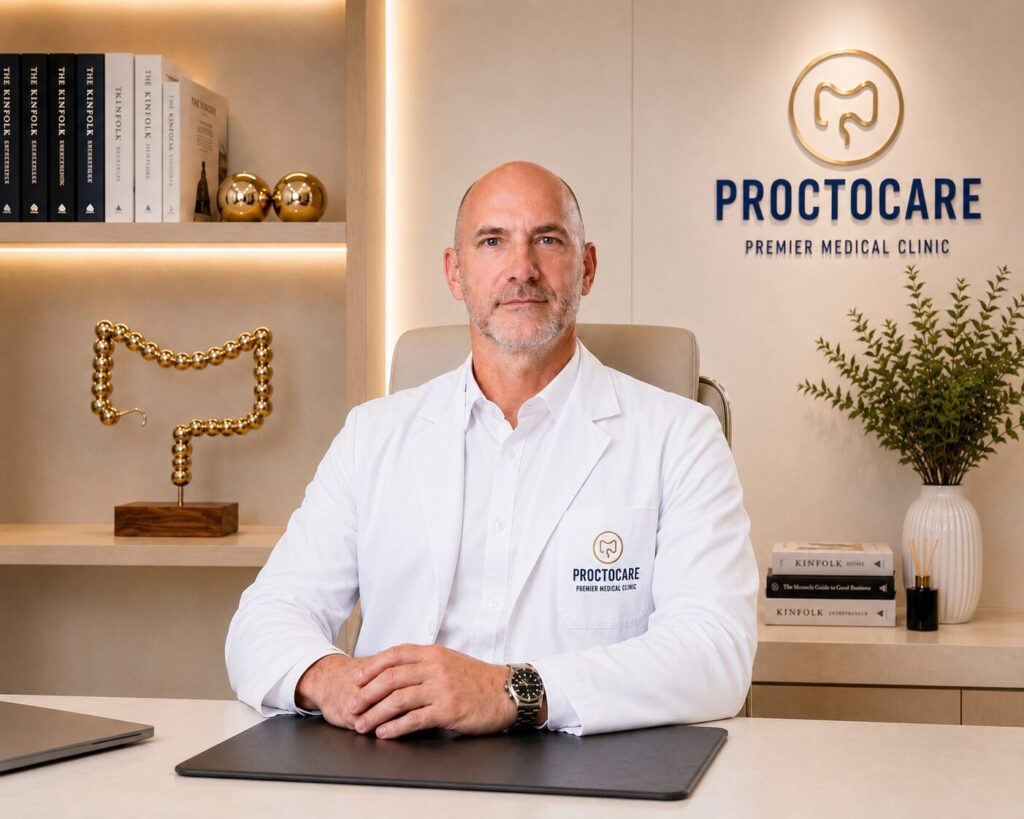
Gastroenterologist · head of the endoscopy unit at the University Hospital Bratislava (UNB)
A gastroenterologist with more than 30 years of experience in digestive endoscopy. He specializes in gastroscopy, colonoscopy and advanced endoscopic procedures.
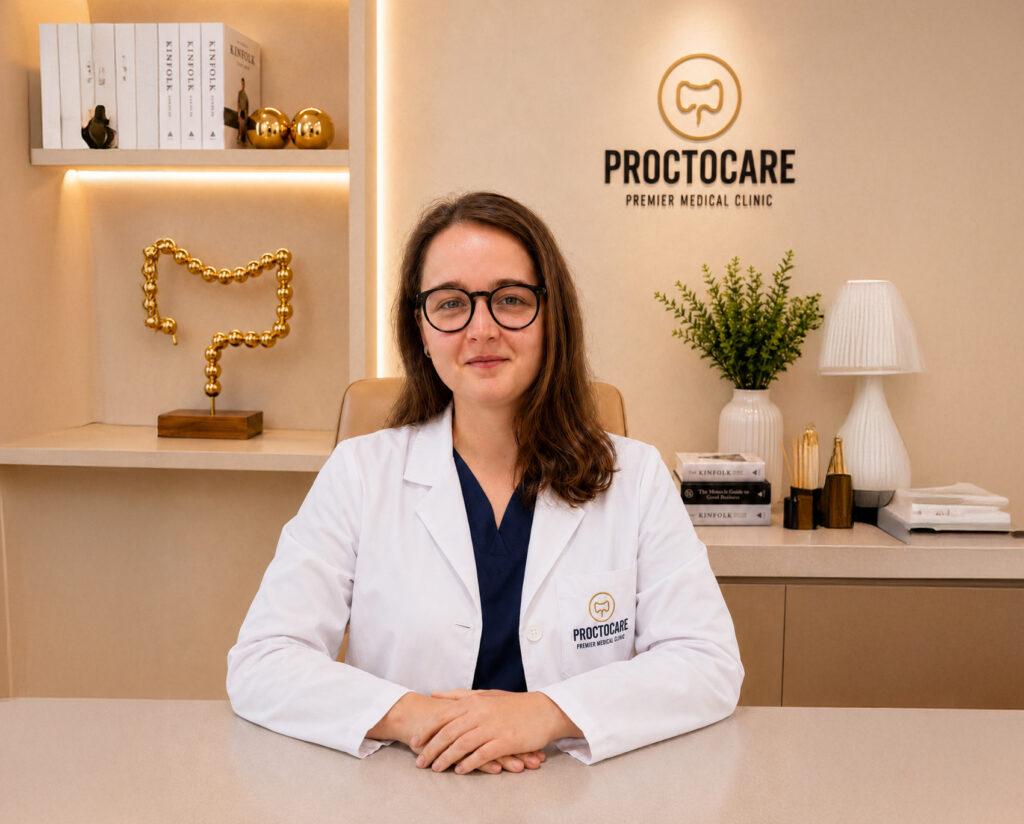
Gastroenterologist · Bratislava office
She specializes in the diagnosis and treatment of diseases of the digestive tract, including endoscopic examinations and functional gastroenterology, with an emphasis on patient comfort during the examination.
Author and medical review: MUDr. Tomáš Zamborský – gastroenterologist with more than 20 years of experience, head medical guarantor of gastroenterology at Proctocare. · Last medical review: July 2026
Suspect an inflammatory bowel disease?
Book an examination – Bratislava, no referral needed and no long wait. Call +421 948 687 667.
Bratislava: Bernolákova 9, 811 07 (STEIN II) · Mon–Fri 07:30–19:30, Sat 07:30–12:30
info@proctocare.sk
Ulcerative colitis
Ulcerative colitis is a chronic inflammatory disease of the colon from the IBD group. It manifests mainly as diarrhea with blood, abdominal cramps and fatigue. At Proctocare in Bratislava, the diagnosis and treatment of IBD are handled by MUDr. Tomáš Zamborský, who has long specialized in inflammatory bowel diseases.
- MUDr. Tomáš Zamborský has long specialized in inflammatory bowel diseases (IBD)
- Colonoscopy with tissue sampling within a few days, under sedation
- Complete diagnostics in one place – calprotectin, blood tests and endoscopy
- We speak English
Bratislava – Bernolákova 9 (STEIN II)
What ulcerative colitis is
Ulcerative colitis, together with Crohn’s disease, belongs to the inflammatory bowel diseases (IBD). The inflammation affects the lining of the colon – it typically starts in the rectum and spreads continuously upwards. Small ulcers form on the inflamed lining and bleed, which is why blood in the stool is one of the most common symptoms.
The disease runs in waves: periods of active inflammation (relapses) alternate with calm periods (remissions), which can last months to years. It most often first appears between the ages of 15 and 35. Ulcerative colitis cannot be completely cured, but with properly set-up treatment it can be kept in long-term remission – most patients live a full life.
Symptoms of ulcerative colitis
The intensity of the complaints depends on the extent and activity of the inflammation – from mild to exhausting.
- Recurrent diarrhea, often with blood and mucus
- Cramping abdominal pain, typically in the lower left abdomen
- A sudden and urgent need to pass stool
- Fatigue and general weakness, often due to anemia
- Unintended weight loss and reduced appetite
- With active inflammation, also a raised temperature
Causes and risk factors
The exact cause of ulcerative colitis is not known. It is a disorder of immune system regulation – the immune system reacts inappropriately to the body’s own bowel lining and gut microbiome, thereby maintaining chronic inflammation. Genetic predisposition (IBD in the family increases the risk) and environmental factors both play a role.
The disease is not caused by diet or stress – these can, however, worsen its course. It is important to know that years of untreated inflammation of the colon increase the risk of colon cancer, which is why regular endoscopic monitoring is part of treatment.
Diagnosis of ulcerative colitis at our center
The basis is a detailed discussion, a physical examination and laboratory tests – a blood count to detect anemia, biochemical screening and, above all, fecal calprotectin, a sensitive marker of bowel inflammation that helps distinguish IBD from functional complaints.
The diagnosis is definitively confirmed by colonoscopy with sampling of the lining for histological examination. You usually have an appointment within a few days, and thanks to sedation it takes place with minimal discomfort. Calprotectin and colonoscopy then also serve for long-term monitoring of disease activity.
Treatment of ulcerative colitis at our center
The goal of treatment is to heal the inflammation, induce remission and maintain it for as long as possible.
Biological therapy – we prepare and refer
Biological therapy is administered in specialized biological therapy centers. If your condition requires it, we prepare complete documentation, refer you to the appropriate center and continue to follow you up.
Lifestyle and supportive treatment
We advise you on diet during relapse and remission, supplement iron or vitamins in case of anemia and help you manage the disease in everyday life.
We provide outpatient diagnosis, setting up of treatment and long-term follow-up at our center; biological therapy belongs to biological therapy centers, to which we refer you fully prepared if needed.
When you should definitely see a doctor
Never put off the following symptoms – they may signal an inflammatory bowel disease or its flare-up:
- Blood in the stool or recurrent bloody diarrhea
- Diarrhea lasting more than two weeks
- Abdominal cramps accompanied by a temperature
- Unintended weight loss and increasing fatigue
- Diarrhea that wakes you from sleep
- Worsening of complaints despite established treatment
Frequently asked questions about ulcerative colitis
It cannot yet be completely cured; it is a chronic disease. With properly set-up treatment, however, remission can be induced and maintained long-term – a period without complaints that can last for years. Most patients live a full working and family life.
Both belong to the inflammatory bowel diseases (IBD). Ulcerative colitis affects only the colon and the inflammation is continuous in the lining, whereas Crohn’s disease can affect any part of the digestive tract and the inflammation involves the whole bowel wall. Colonoscopy with histology helps to tell them apart.
We start with an examination and consultation, laboratory tests and fecal calprotectin. The diagnosis is confirmed by colonoscopy with biopsies, for which you usually have an appointment at our center within a few days, with the option of sedation.
Calprotectin is a protein released into the stool by inflammatory cells in the bowel. Its level closely reflects the activity of the inflammation, so we use it not only for diagnosis but also for long-term monitoring of whether treatment is working – this often avoids an unnecessary colonoscopy.
Biological therapy is considered when standard treatment does not control the inflammation sufficiently. It is administered in specialized biological therapy centers.
Years of active inflammation increase the risk, which is why regular endoscopic monitoring with tissue sampling is part of care. A well-treated disease in remission considerably reduces the risk – another reason not to underestimate treatment.
Related topics
Crohn's disease
The second of the inflammatory bowel diseases – how it differs from ulcerative colitis and how we diagnose it.
Colonoscopy
The key examination when IBD is suspected – at our center within a few days and under sedation.
Constipation and diarrhea
When a change in stool is only temporary and when it deserves an examination by a gastroenterologist.
Who will take care of you
Gastroenterologist · lead specialist for gastroenterology at Proctocare
MUDr. Tomáš Zamborský specializes in the diagnosis and treatment of diseases of the digestive tract, with an emphasis on precise diagnostics and an individual approach. He has also long specialized in inflammatory bowel diseases (Crohn’s disease, ulcerative colitis).
- Gastroenterologist with more than 20 years of experience
- Gastroenterology Clinic of the Slovak Medical University and the University Hospital Bratislava
- Publishing and lecturing activity in the field
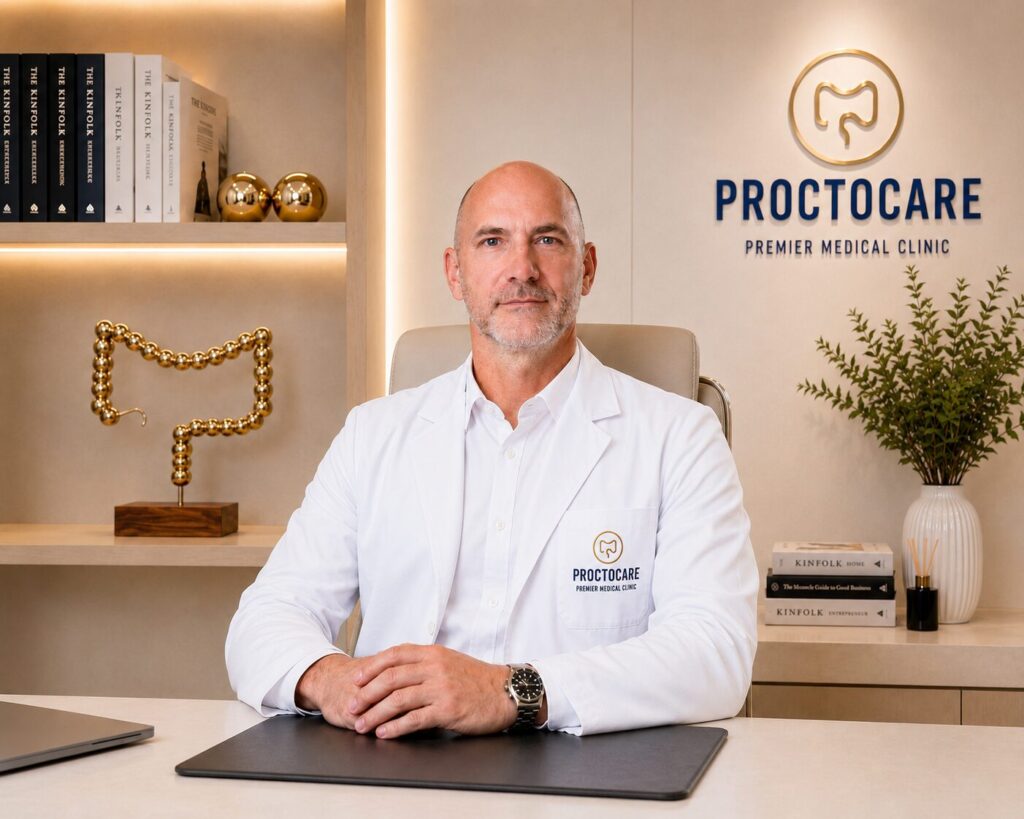
Gastroenterologist · head of the endoscopy unit at the University Hospital Bratislava (UNB)
A gastroenterologist with more than 30 years of experience in digestive endoscopy. He specializes in gastroscopy, colonoscopy and advanced endoscopic procedures.
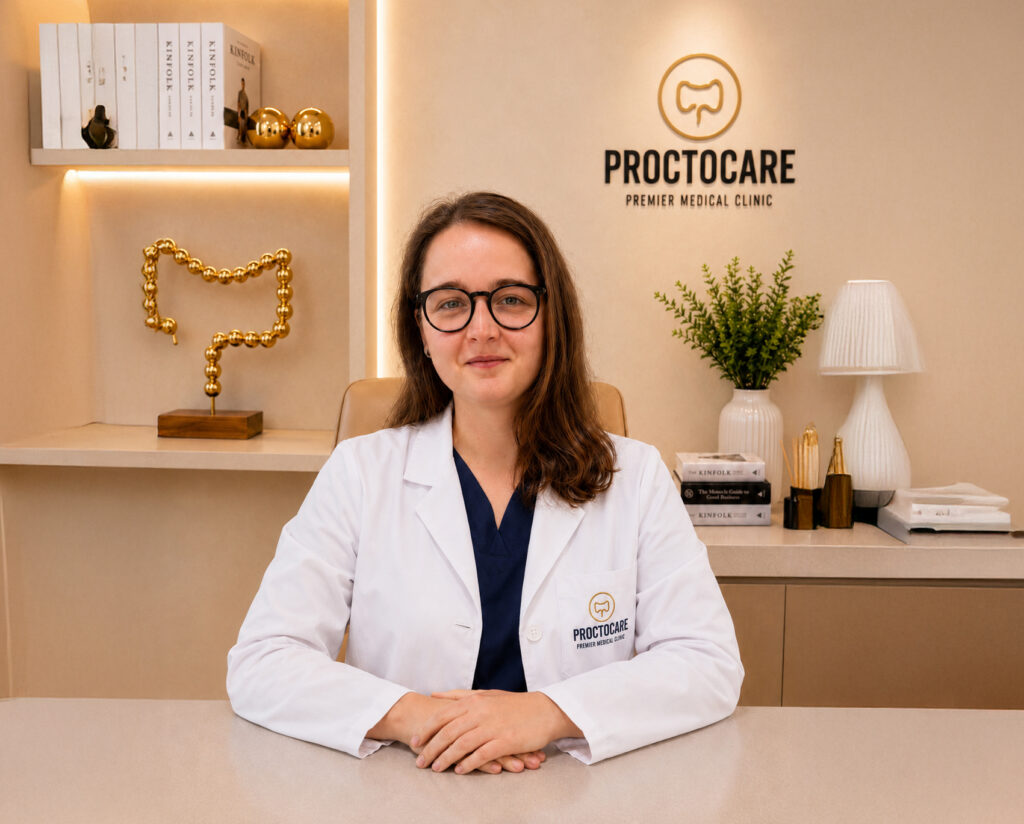
Gastroenterologist · Bratislava office
She specializes in the diagnosis and treatment of diseases of the digestive tract, including endoscopic examinations and functional gastroenterology, with an emphasis on patient comfort during the examination.
Author and medical review: MUDr. Tomáš Zamborský – gastroenterologist with more than 20 years of experience, head medical guarantor of gastroenterology at Proctocare. · Last medical review: July 2026
Suspect an inflammatory bowel disease?
Book an examination – Bratislava, no referral needed and no long wait. Call +421 948 687 667.
Bratislava: Bernolákova 9, 811 07 (STEIN II) · Mon–Fri 07:30–19:30, Sat 07:30–12:30
info@proctocare.sk